Monday, 7 October 2013

Brafton: SEO alert: Penguin 2.1 live

Brafton
News Content Marketing 
SEO alert: Penguin 2.1 live
Oct 7th 2013, 15:10, by Lauren Kaye

Google's Matt Cutts announces Penguin 2.1, a new version of its spam-fighting algorithm.

Just when you thought your SEO strategy had recovered from Penguin 2.0 - May's iteration of Google's spam-fighting technology - the search engine launched a new version that's expected to hit less than 1 percent of all queries to a noticeable degree.

Google's own Matt Cutts revealed the algorithm refresh in a Tweet on Friday.

Penguin refresh to have 'noticeable' impact

Google recently announced Penguin 1.2, the latest version of its spam-fighting technology.

If the Penguin update is similar to Google's Panda refreshes, it's likely the new version will clean up spammy sites that weren't hit by the first version (which impacted around 2.3 percent of all searches). This means it could target domains with questionable backlink profiles, and marketers who thought they had slipped under the radar will now need to go back and remove any disreputable references.

In the Tweet announcing Penguin 2.1, Cutts directed concerned marketers to the Google Webmaster Central Blog for more information about Penguin, but they won't find any new updates on the forum. It still says the search technology penalizes domains using black hat practices to gain higher rankings in SERPs, while sites employing white hat tactics will (presumably) remain untouched. 

During the year-and-a-half since Google first released its official guidance about Penguin, Cutts and other search marketing professionals have released other information that can help guide brands' SEO efforts, such as:

1. Stop focusing so much on link building, worry about creating great content

Brafton previously covered a Google Webmaster Help Channel video in which Cutts told marketers that it's better to focus on the bigger picture of content creation. Brands want to produce resources for their target audiences -customers - and not search engines.

He suggested that some companies become derailed in their search marketing efforts, striving to climb to the top of SERPs by mastering technical practices rather than thinking about what will compel visitors to return time and time again. It's the latter that will win out in the end, he advised.

2. If something seems spammy, fix it!

Following Penguin 2.0, Cutts also gave marketers actionable steps to clean up their backlink profiles and regain prominence in search results.

Google recently announced the new version of its Penguin algorithm.

  • First, webmasters must spot the offending links (any purchased links, links coming from unreputable sources or sites with low domain authority, etc.) and submit a request, asking for them to be removed.
  • If the petition is unanswered, webmasters can use the disavow tool to remove domains (or individual links).

Once these steps are completed, sites can submit a reconsideration request to Google.

Still want more information about the evolution of Penguin and how to win a fight against this spam-fighting algorithm? Check out this resource from Brafton!

Media files:
Penguin-2.1.png (image/png, 0 MB)
You are receiving this email because you subscribed to this feed at blogtrottr.com.

If you no longer wish to receive these emails, you can unsubscribe from this feed, or manage all your subscriptions

Brafton: When NOT to use Authorship

Brafton
News Content Marketing 
When NOT to use Authorship
Oct 7th 2013, 13:30, by Lauren Kaye

Brafton reveals that Authoship markup isn't always the best choice for web content.

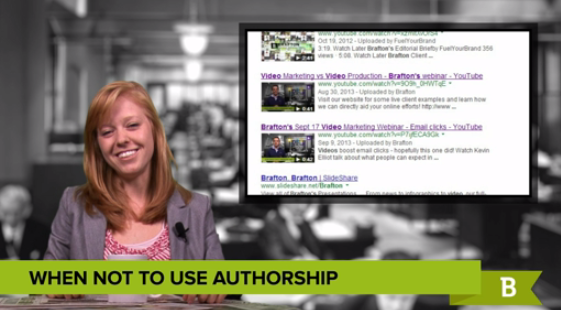
Hi, Lauren Kaye with this week's Content & Coffee with Brafton and I have some insights to share about Google Authorship. Click play to watch the video or read the full text below!

[sublimevideo poster="http://cdn3.brafton.com/wp-content/uploads/2013/10/CC-Oct-7.png" src2="(hd)http://videocontent.brafton.com/b9cc69a148bd9f4d/video/custom/mp4/747-2.mp4" src3="http://videocontent.brafton.com/b9cc69a148bd9f4d/video/custom/mp4/747-2.mp4" src5="(hd)http://videocontent.brafton.com/b9cc69a148bd9f4d/video/custom/ogg/747-3.ogg" width="" height=""]

By now, you probably know how important Authorship is - and could become - in the future. Google says it doesn't have any immediate plans to turn on AuthorRank, a theorized search technology that could rank web content based on an author's credibility and social sway, but publishers already see the benefits of giving writers credit for their posts.

At Brafton, we've noticed that content containing Authorship markup receives more clickthroughs than posts without rich snippets - sometimes 100 percent more clicks - simply because links with writers' bylines and photos get more attention on the screen.

Some prominent search marketers who spoke at last week's SMX East conference assert there are bigger benefits at play, and content with Authorship consistently outranks equivalent posts without the markup.

But the "does it or doesn't it" debate is old news. What's new from SMX is that Authorship is NOT ideal in certain situations. Sometimes, you want other rich snippets to show in search results.

Take video for example. During a session about Authorship, Search Mojo's Janet Driscoll Miller explained that for videos, you want video player rather than Authorship markup to display in search results. This shows a thumbnail of the video directly in SERPs instead of a writer's photo and byline, and it's better for two reasons. One, it helps Google understand the content, and two, the click-to-play link gives internet users direct access to the content they want.

And we all know Google wants to give users the best experiences possible.

Video isn't the only type of content that's better off without Authorship. Website or blog landing pages, company press releases, PDFs and PowerPoints are also formats that may not benefit from Authorship markup. If the information doesn't convey an opinion or relay a person's insight, you should think twice before slapping on a byline. Chances are, there is another type of markup that can also help increase search visibility while also providing users (and Google) with more relevant information.

Catch you next week, and happy content marketing!

Media files:
CC-Oct-7.png (image/png, 0.3 MB)
You are receiving this email because you subscribed to this feed at blogtrottr.com.

If you no longer wish to receive these emails, you can unsubscribe from this feed, or manage all your subscriptions

Friday, 4 October 2013

Brafton: Could Editorialized Tweets wrangle the social media landscape?

Brafton
News Content Marketing 
Impart your knowledge.

Learn how to start a business by offering an online course. Signup for our ebook today.
From our sponsors
Could Editorialized Tweets wrangle the social media landscape?
Oct 4th 2013, 19:21, by Max Adagio

Editorialized Tweets help brands make the most of their social media content.

The internet is sometimes compared to the Wild West, but a new tool from Twitter stands to introduce some semblance of jurisdiction. It is called "Editorialized Tweets," and it was recently tested by the New York Times.

As the last truly free territory of the modern age, some say the internet is not to be conquered. Here, Horatio Algers can go from rags to riches, ruffians can rip off the credulous and individuals have a forum on which they can express themselves with minimal policing. As a Social Media Associate, I help manage companies' online conversations, and for myriad reasons, understand the need to bring some structure and predictability to the web.

What exactly are Editorialized Tweets?

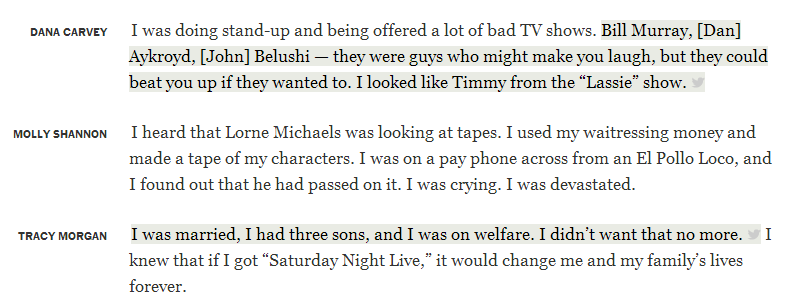
Editorialized Tweets allowed the publisher to highlight sections of content, which users could then Tweet directly with a click. Users who clicked the links were then directed to the exact section of the article where the quote, fact or stat could be found.

As both Twitter and the New York Times gear up for periods of online experimentation, the introduction of a tool that brings new context to social media content doesn't come as a great shock, but its ramifications are making waves in the marketing community.

The new Twitter feature was debuted in Dave Itzkoff's "The God of 'SNL' Will See You Now." Itzkoff later spoke with Poynter, explaining that Editorialized Tweets are "a one-off experiment on this story," and asserted that the feature would not permeate NYT content. However, there is mounting pressure in the online marketing community that suggests these types of tools will become mainstream in time.

A new feature indicates the growing importance of context around social content.

Not all businesses have access to Editorialized Tweets yet, but a website and Wordpress application called clicktotweet performs darn near the same function, the main difference being that users click a link to interact instead of a Twitter widget. Using this tool, other companies will be empowered to call out the sentences, facts and phrases that draw the most attention, or select the best "traveling billboards for the overall story," as Itzkoff described it.

I'll be referencing both tools as "Editorialized Tweets" because it's fancy and I like it more. Let's look at how this feature puts reigns on some of the untamed internet by giving more control over the content goes viral, bolstering engagement and lending credibility in a frontier where trust goes a long way.

Make your content more socially shareable

Content marketers can make the most important keywords and phrases more accessible and, importantly, more sharable with Editorialized Tweets. Itzkoff's strategy leaned largely on pulling quotes from his book, in which he interviews SNL comedians.

Businesses can use the same feature to highlight buzzwords and key sentences that make the most marketing sense—no need to trust online readers to package and compose tweeted content (even though we still count on them to propagate it). Moreover, Editorialized Tweets make data gathering easy by showing what content is most shareable.

By sharing more relevant snippets of long-form articles, the most important parts of an article or blog are readily available to audiences that want information fast, saving readers time and effort. In terms of tweeting the content, too, the process is much easier - there's no more copying and pasting - but the benefits go beyond comfort.

Increase engagement

Editorialized Tweets are an engagement goldmine. The Times noted that Itzkoff's article was shared 11 times more than its most popular content last month. The ease of interaction just mentioned is partially the reason for this, but a few other factors are at play.

Marketers have a chance to integrate more targeted #hashtags and @mentions into Tweets referencing their brand content. Before, the richest-possible automatically tweeted content consisted of "'The Article Title' via @source link." They can also incorporate descriptions and commentary into their content with Editorialized Tweets, a function that seems like an obvious way to bring new dimension to social media posts.

Editorialized Tweets can increase engagement.

Consumers might also find that Editorialized Tweets seem more credible than previous options as well. Automated title Tweets can seem spammy compared to the quotes in the new feature, which have more character and specificity. This builds trust with audiences who will, in turn, be more likely to engage.

As Rebecca Desfosse points out, there is another psychological element to Editorialized Tweets' engagement appeal: "Choosing a section of the story to tweet gives readers a feeling of ownership in the story," making them more connected and likely to share.

Editorialized Tweets: Wrangling the net and driving ROI

While the Internet is not a wilderness that will likely ever be tamed, it can be guided and, at times, controlled. To maintain a competitive edge, marketers would be wise to keep Editorialized Tweets close at their hips as a way to further shape their social media campaigns.

Media files:
Editorialized-Tweets.png (image/png, 0 MB)
You are receiving this email because you subscribed to this feed at blogtrottr.com.

If you no longer wish to receive these emails, you can unsubscribe from this feed, or manage all your subscriptions

Thursday, 3 October 2013

Brafton: Does Authorship help rankings? Insights from an #SMX debate

Brafton
News Content Marketing 
Marketing on a budget?

Join the waiting list for our newest ebook on How to Run Ads on an Entrepreneur's Budget.
From our sponsors
Does Authorship help rankings? Insights from an #SMX debate
Oct 3rd 2013, 19:56, by Katherine Griwert

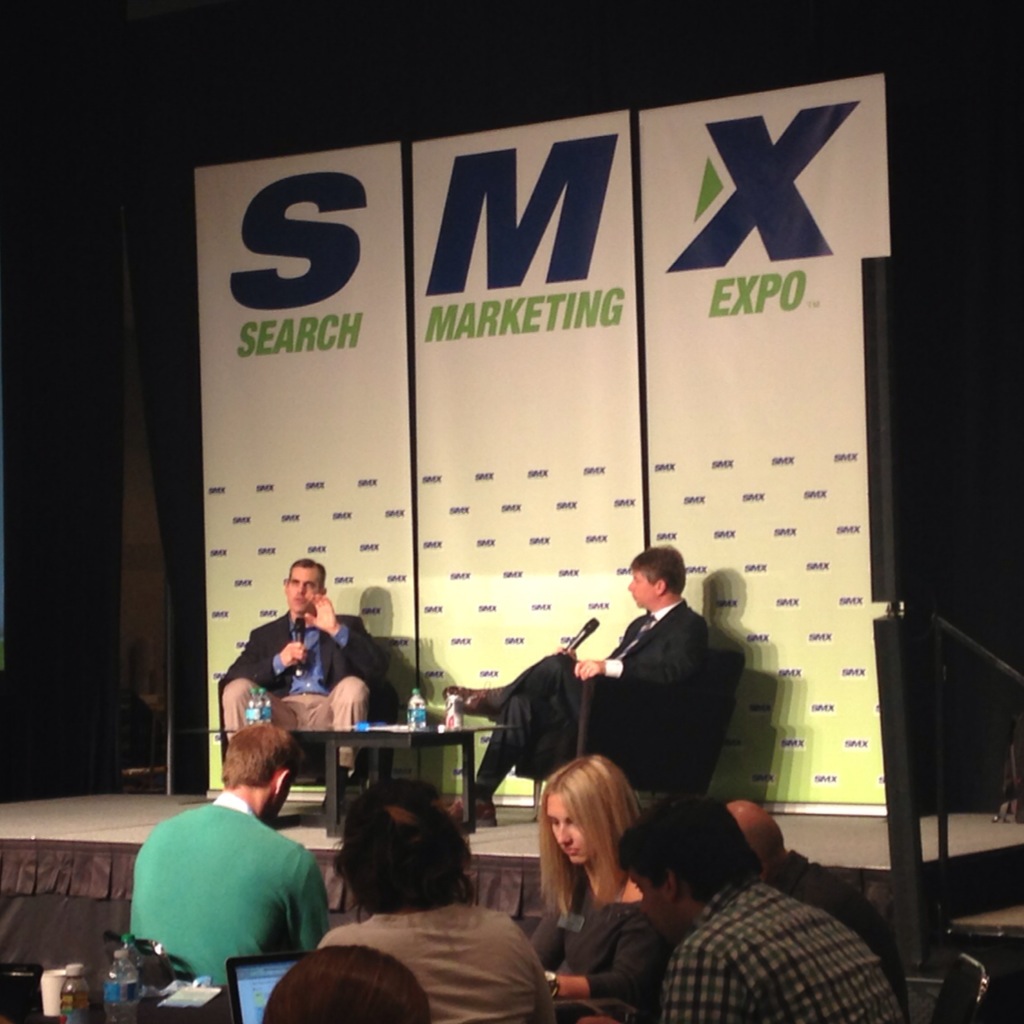
SMX's Authorship panel shared insights about why the markup is so important.

Authorship might be the "shiny, new thing" in SEO, but SMX experts (and Brafton's strategists) agree it's more than a flash in the pan. Theories of AuthorRank aside (and Google's Webmaster Trends Analyst and SMX speaker Pierre Far says they are ONLY theories), the Author Badge is measurably helping results get higher click-through rates. Plus, the search giant has hinted that authority could become a ranking signal.

As with any new and buzzworthy thing in marketing, some brands are skeptical about why they should use Authorship. The SMX panelists shared insights on why Authorship is becoming a site essential and Janet Driscoll Miller, President and CEO of Search Mojo, shared an example of what she believes demonstrates undeniable impact on SERP presence.

Authorship: Bylines bring clicks today… ranking tomorrow?

John Shehata, Executive Director of Search and Social Media for ABC News, started the session with some quick insights on why businesses – and publishers – should be using Authorship:

  •  Search results see up to 150 percent higher CTR for posts with an author snippets in SERPs
  •  It's becoming a competitive must in certain industries (i.e.: 90 percent of tech writers have Authorship set up)
  • · Google has said it will be watching Authority signals more closely over time

Shehata gave a broad overview of the history of Authorship and patents that point to the potential for AuthorRank (more here). Shehata also referenced quotes from Matt Cutts about the future of search, which Brafton covered at SMX West, in which the distinguished Search Engineer claims:

"Over time, Google will care more about identity and social reputation."

An argument for Authorship's current impact on rankings:

Forget "tomorrow" - Janet Driscoll Miller, President and CEO of Search Mojo, said, pointing to a compelling example of what she believes is a smoking gun for the impact of authorship on ranking TODAY. Miller highlighted the case of one client, a respected (but unnamed) association. Her client seemed to get hit by Panda for duplicate content, even though this 100-percent-original content had been created by the company and was living on its site for quite some time.

SMX comparison between two websites - one with original content and the other with duplicate authored content.

When she ran a web search, she realized the association's content was duplicated on the web, and another site was coming up in prime SERP real estate for content lifted from her client. The copycat site had low authority backlinks, and a comparatively low domain authority. However, it had applied Authorship for the plagiarized copy and was getting a rich snippet featuring a site contributor (who in no way produced her client's content.)

"The association clearly had much more authority, but the other site was getting much more credit because of Authorship," she said.

She made a really convincing case, but Far wouldn't let her (or attendees) indulge the theory: "Authorship is not a signal." 

When Miller challenged him on this, he refused to engage further unless she would name the Association, and the conversation (unfortunately!) ended.

Marketers can be the judge… but there are still clear CTR benefits for Authorship. Learn more about Authorship and potential AuthorRank in Brafton's free related guide. 

Media files:
photo-10.jpg (image/jpeg, 0.1 MB)
You are receiving this email because you subscribed to this feed at blogtrottr.com.

If you no longer wish to receive these emails, you can unsubscribe from this feed, or manage all your subscriptions

Brafton: 8 Steps to make social work for search marketing from #SMX

Brafton
News Content Marketing 
An aspiring entrepreneur?

Learn about how top Silicon Valley entrepreneurs grew their businesses in our free ebook.
From our sponsors
8 Steps to make social work for search marketing from #SMX
Oct 3rd 2013, 16:12, by Lauren Kaye

At SMX, speakers talked about how search and social work together to drive results.

Unlike search engine marketing, there aren't hard and fast rules for social media campaigns. Marketers know they need to be conversational and engaging - participatory without being overtly promotional - but they may not know how to make social content work toward their other business goals. The speakers at SMX East 2013 offered a number of suggestions that can help brands get more search value out their social media campaigns.

Here are eight steps compiled from those suggestions that can help marketers amplify their efforts:

Step 1: Identify influencers to increase reach

One of the biggest signals of an effective social marketing campaign is a well-connected network. That means influencers. Brands can greatly expand their content's reach when they deliver it to key individuals who are recognized as industry leaders with their own dedicated readerships.

There are certain types of people who have the visibility and influence to give brands a measurable lift in reach, according to Debra Mastaler, Alliance-Link's Link Building Specialist.

Industry influencers can help marketers amplify their brand content in search and social.

They include:

  •  Bloggers and journalists
  •  Celebrities
  •  Experts and advocates
  •  Reviewers

But how can marketers come into contact with those individuals, suss out who is actually an influencer and then build relationships with them?

Step 2: Find authorities on forums
  •  Technorati and Alltop
  •  The Google blog directory
  •  Facebook search (Bloggers who have created Facebook pages for their websites likely have a big enough marketing influence to justify the efforts, said Mastaler.)
  •  SCORE, a platform for retired executives
  • Muck Rack and Press Pass for authoritative journalists
Step 3: Check credentials
  •  Make sure authors are on Google+ and involved in G+ communities
  •  Review Klout scores (This opt-in network indicates individuals are interested in building an online reputation and visibility.)
  •  Use free trials on sites like followerwonk (a tool that pulls Twitter bios and follower counts), Tweetreach and SocialBro (sites that show how far an individual's content reaches.)
Step 4: Reach out to potential influencers
  •  Actively follow journalists on Twitter
  •  Align yourself with credible allies

"Once you identify followers, use comments as icebreakers," advised Mastaler. It might be easier to connect with heavy-hitters on casual forums where it's acceptable (and advisable) to engage openly with people in your network. Over time, these discussions can turn into mutually beneficial relationships that give brand content more exposure on social networks and in search results.

Step 5: Identify networks that provide the most visibility

If companies' target demographics are primarily on Facebook, it makes sense to build large presences on this social network. The same goes with Twitter, LinkedIn, Pinterest, Google+ or any other platform that emerges.

All the same, there is evidence that certain sites offer competitive advantages when it comes to gaining exposure in search results. Namely, brands and writers with stronger Google+ presences tend to take up more search result real estate, according to Virante Director of Digital Outreach Mark Traphagen.

Step 6: When all else fails, become an influencer yourself
Use G+ to build Authorship presences

Dredging up the age-old debate about whether Google+ adds SEO value, Traphagen shared how he's seen success. An early adopter, he joined just four days after G+ was launched on the hunch that the search engine's decision to build a social platform would one day impact search performance. He now boasts:

Google Authorship provides benefits between search and social media marketing campaigns.

  •  62,000 followers
  •  20,000+ members across communities
  •  A position as one of the Top 500 U.S. Google+ users

Perhaps more importantly, Traphagen noticed over time that his content performed drastically better with the influence he built on the search-engine owned network. After creating a host of resources about backlink data and sharing them on Google+, his content dominated eight of 10 search results on a Google SERP.

There are two reasons for this: Authorship and PageRank

According to Traphagen, "Communities have PageRank. Google is evaluating them much in the same way that they evaluate regular websites."

While Google is adamant that the patents it's secured for a ranking signal based on author credibility is not active, Traphagen defended his stance that marketers who leverage the social network will make their content more visible in search results.

Step 7: Look at the bigger ROI picture

Marketers are hindering their own social and search efforts by viewing them as autonomous practices, according to Annalise Kaylor, Associate Creative Director at AimClear.

"Stop looking at SEO, PPC and social as separate buckets. Start asking, 'What drives the results?'"

"Stop looking at SEO, PPC and social as separate buckets. Start asking, 'What drives the results?'" she told the audience.

When marketers look at the bigger picture, they will recognize how social shares impact SEO, and in turn, how search engine marketing identifies paid campaign opportunities.

Some examples:

  •  A Facebook photo that earn a lot of clicks can be featured on a blog post to increase traffic
  •  A Tweet that is not shared indicates a certain topic is not relevant to audiences and should be downplayed in the editorial calendar
  •  A PPC ad that drives lots of traffic suggests organic content around said keyword might also earn clicks

Taking a holistic approach, marketers will see how campaigns can work together and identify gaps where cross-platform practices could be driving better results.

Step 8: Create content that's worth sharing in the first place

Regardless of which networks brands use, reach and ROI ultimately come down to content quality. If a company is creating interesting information for social networks and the web, and providing readers with value - that content will be shared across the internet and attract the online community's attention.

Media files:
SMX-Search-and-Social.jpg (image/jpeg, 0 MB)
You are receiving this email because you subscribed to this feed at blogtrottr.com.

If you no longer wish to receive these emails, you can unsubscribe from this feed, or manage all your subscriptions

Wednesday, 2 October 2013

Brafton: Twitter marketing for the whole customer journey – Tips from #SMX East

Brafton
News Content Marketing 
Impart your knowledge.

Learn how to start a business by offering an online course. Signup for our ebook today.
From our sponsors
Twitter marketing for the whole customer journey – Tips from #SMX East
Oct 2nd 2013, 23:53, by Lauren Kaye

At the SMX Keynote, Richard Alfonsi explained how Twitter paid options can support organic content marketing.

Building an organic social media marketing campaign is the right way to get started on Twitter, but when brands want to amplify their presences, they should move into the ad platform, advised the network's Vice President of Sales Richard Alfonsi during SMX East 2013's keynote speech. Not surprisingly, the Sales VP promoted the network's ad service, but he also shared plenty of insights for any Twitter marketing effort.

From top to bottom

Alfonsi pointed out that Twitter's initial paid offerings - Promoted Tweets and Accounts - are effective for upper-funnel goals (think: brand awareness and traffic).

Use social media marketing to move from the top of the funnel to the bottom

Some evidence that paid Twitter marketing tactics work:

  •  Purchase activity goes up 8 percent when users are exposed to a Promoted Tweet
  •  Engagement increases 12 percent when users are exposed to a Promoted Tweet

These results are great, but Twitter wants to help partners move users toward the lower funnel, too. With that in mind, Alfonsi shared a more conversion-focused stat:

  • Purchase activity rises 29 percent when the people exposed to ads are followers

He also highlighted new products such as Lead Generation Cards that can track social engagement and opt-ins as people move through the funnel. Additionally, Twitter is working with CPG players to bridge the gap between online Tweets, engagement and offline sales.

Twitter as a second screen: Cross-platform and TV engagement

Alfonsi reported Twitter plans to continue building the connection between TV and Tweets. Already, 95 percent of TV conversations happen on Twitter and the network intends to help marketers insert their messages into relevant real-time discussions.

Enter Twitter Amplify: A product that helps connect Twitter and the TV world. Verizon, NFL and other brands are already using this tool to push brand content right to Twitter feeds as live programming airs, establishing solid connections with the TV world. Although Alfonsi shied away from the a question about whether this keeps live TV relevant in a world of on-demand streaming, he said that Twitter conversations can add dimension to events (e.g. The Emmys, the SuperBowl, etc.) by helping viewers share their experiences.

Twitter's Amplify product moves across screens.

Twitter's television-ad targeting also enables advertisers to reach wider audiences on their second screens during live TV. There are even benefits hanging in the balance for marketers of smaller businesses by allowing them to get targeting data about their online audiences.

"Twitter amplify helps marketers get more mileage out of their content," said Alfonsi. "[For instance, the] NFL can Tweet out a clip from the NFL handle and promote that to reach followers who don't follow the NFL."

What's the future of ads?

There are three key ad trends that Twitter recognizes will gain prominence in the future, and it's built products to supported them.

1. Mobile ads

2. Programmatic modeling

3. Native ads for mobile applications

As mobile tech dependence continues to rise, marketers will need agility to capture on-demand opportunities. More, quality is becoming increasingly important in the search and social worlds, and ads must enhance the overall user experiences to drive ROI.

"Real 'real-time'" connection: "Now" moments

Twitter separates itself from other social networks by restricting the number of characters allowed in posts, but also in its ability to cultivate "Now" moments. "Now" moments happen every day when people connect to speak about things happening in real-time.

"[It's all about] finding people in the right mindset at the right time with the right message. We're giving marketers the opportunity to tap into those conversations," said Alfonsi.

"[It's all about] finding people in the right mindset at the right time with the right message."

Some examples of brands that have been successful in capturing these moments:

- A restaurant responding to a person's Tweet about being hungry with an ad or offer.

- An outdoor company replying to users' conversations about going camping over the weekend.

- Oreo's ad during the Super Bowl blackout (which garnered more accolades and attention than the multi-million dollar commercials that aired during the actual event).

How do marketers capitalize on "Now" moments?

Any company with a Twitter profile can take advantage of the network's reach to amplify social media content and support their bottom-funnel goals. Here's how:

  • Listen to real time conversations
  • Be authentic to your brand and your business to avoid being intrusive
  • Be smart about content and targeting – engagement rates are between 1 and 3 percent
  • Pick the right keywords - ads are sold on words with a bid basis, and most important words should always be "on" in case something timely happens

People search on Twitter a lot, but they don't approach social queries the same way they ask questions on traditional engines. As Alfonsi said, "Search keywords are about long-term memory, while Twitter keywords are about timely conversations."

Using Twitter beyond the "Now"

Brands don't have to be selling products "now" in order to benefit from Twitter, Alfonsi explained in response to an audience member's question about how the site works for events-focused companies.

"Use smart keyword targeting around the events to build interest now for something that's coming up."

"Use smart keyword targeting around the events to build interest now for something that's coming up," he advised.

The idea is to draw in target customers and create conversations that will compel people to participate. A well-placed ad can reach target audiences when they're in need of products and services immediately, or invite them to engage over time until they are ready to convert.

Of course, organic campaigns can achieve the same result when marketers stay at the pulse of relevant conversations and offer helpful insights.

Media files:
SMX-Keynote.jpg (image/jpeg, 0.2 MB)
You are receiving this email because you subscribed to this feed at blogtrottr.com.

If you no longer wish to receive these emails, you can unsubscribe from this feed, or manage all your subscriptions

Brafton: Tips to diversify digital marketing from #SMX

Brafton
News Content Marketing 
Retargeting on Facebook?

Get more sales and conversions with Facebook retargeting. Try it free for 14 days. Set up takes just minutes!
From our sponsors
Tips to diversify digital marketing from #SMX
Oct 2nd 2013, 19:42, by Lauren Kaye

Marketers are advised to create diverse content marketing strategies to support their search strategies.

Up until now, it's been widely accepted within the search engine marketing world that Google should be at the center of any well-advised SEO strategy. Consistently accounting for 67 percent of search queries in comScore's monthly search engine rankings, it made sense for brands to hedge their bets on the platform. But with constant algorithm updates and increasing reports of social traffic conversions, more webmasters are looking for ways to diversify their digital marketing strategies. Speakers at this week's SMX East Expo highlighted how companies are (wisely) breaking their Google dependency to drive success online.

Although it's unlikely a Google-falling-from-grace scenario is in the near future, Ted Ives, Principal of Coconut Headphones; Matt Ballek, Director of Strategic Distribution Services for Magnet Media and Brandon Hassler, Senior Account Manager for 97th Floor have already seen brands increase content creation to support cross-web campaigns.

Repurpose and share content

Most brands know they need content for SEO, but they are missing the bigger picture if they don't see how it fuels other goals as well.

  • White papers and eBooks can help companies or individuals become thought leaders.
  • Smart social media marketing drives brand awareness and web traffic.
  • Email newsletters generate and nurture leads.

During the event, Ives pointed out that companies don't necessarily need to have a host of industry experts and authoritative writers in house to create fodder for an ambitious cross-channel content marketing campaign. They can tap a few influencers for, say, a presentation or case study and then repurpose the material for blogs, news articles, press releases and webinars.

Cast a wider social media net

Companies are overlooking social networks that support their goals for content distribution, according to Hassler. Most businesses use major networks like Twitter or Facebook, but he encouraged attendees to be more creative.

Referral traffic coming from SlideShare tends to stay on pages longer than visitors from mainstream social networks. 

He recommended sharing content on SlideShare, a network that hosts presentations, to direct viewers back to company websites. In Hassler's experience, referral traffic coming from SlideShare tends to stay on pages longer than visitors from mainstream social networks, effectively driving up dwell time and lowering bounce rates.

Earn viewers with video

Video marketing is another way companies keep their brand content in front of target audiences. Brafton recently reported that 87 percent of Americans now watch online and YouTube reports it attracts 1 billion unique users every month. With an immense stockpile of content on its channels, YouTube has grown to be not only the second-largest search engine, but also the second-largest social network.

Marketers must look beyond the most obvious metrics to accurately measure the ROI of video. 

Marketers can tap into this stockpile to reach wide audiences, but they must look beyond the most obvious metrics to accurately measure the ROI of their efforts. According to Ballek, the number of views a clip receives does not dictate its success or failure.

Deeper engagement metrics are better metrics to gauge success. When using YouTube (owned by Google, but still separate from search!) he advised marketers to monitor:

  • Social shares
  • Comments
  • Subscriber counts
Organic still No. 1 for now

It's smart to invest in a range of strategies that drive business goals together, however, organic search is still seen as a reliable way to drive leads and conversions. The experts agree: Regardless of the approach or medium, internet marketing success will always depend on brands' ability to create content that engages viewers and compels them to take further action.

Media files:
social-content-sways-buying-decisions.jpg (image/jpeg, 0.5 MB)
You are receiving this email because you subscribed to this feed at blogtrottr.com.

If you no longer wish to receive these emails, you can unsubscribe from this feed, or manage all your subscriptions