Thursday, 3 October 2013

Brafton: 8 Steps to make social work for search marketing from #SMX

Brafton
News Content Marketing 
An aspiring entrepreneur?

Learn about how top Silicon Valley entrepreneurs grew their businesses in our free ebook.
From our sponsors
8 Steps to make social work for search marketing from #SMX
Oct 3rd 2013, 16:12, by Lauren Kaye

At SMX, speakers talked about how search and social work together to drive results.

Unlike search engine marketing, there aren't hard and fast rules for social media campaigns. Marketers know they need to be conversational and engaging - participatory without being overtly promotional - but they may not know how to make social content work toward their other business goals. The speakers at SMX East 2013 offered a number of suggestions that can help brands get more search value out their social media campaigns.

Here are eight steps compiled from those suggestions that can help marketers amplify their efforts:

Step 1: Identify influencers to increase reach

One of the biggest signals of an effective social marketing campaign is a well-connected network. That means influencers. Brands can greatly expand their content's reach when they deliver it to key individuals who are recognized as industry leaders with their own dedicated readerships.

There are certain types of people who have the visibility and influence to give brands a measurable lift in reach, according to Debra Mastaler, Alliance-Link's Link Building Specialist.

Industry influencers can help marketers amplify their brand content in search and social.

They include:

  •  Bloggers and journalists
  •  Celebrities
  •  Experts and advocates
  •  Reviewers

But how can marketers come into contact with those individuals, suss out who is actually an influencer and then build relationships with them?

Step 2: Find authorities on forums
  •  Technorati and Alltop
  •  The Google blog directory
  •  Facebook search (Bloggers who have created Facebook pages for their websites likely have a big enough marketing influence to justify the efforts, said Mastaler.)
  •  SCORE, a platform for retired executives
  • Muck Rack and Press Pass for authoritative journalists
Step 3: Check credentials
  •  Make sure authors are on Google+ and involved in G+ communities
  •  Review Klout scores (This opt-in network indicates individuals are interested in building an online reputation and visibility.)
  •  Use free trials on sites like followerwonk (a tool that pulls Twitter bios and follower counts), Tweetreach and SocialBro (sites that show how far an individual's content reaches.)
Step 4: Reach out to potential influencers
  •  Actively follow journalists on Twitter
  •  Align yourself with credible allies

"Once you identify followers, use comments as icebreakers," advised Mastaler. It might be easier to connect with heavy-hitters on casual forums where it's acceptable (and advisable) to engage openly with people in your network. Over time, these discussions can turn into mutually beneficial relationships that give brand content more exposure on social networks and in search results.

Step 5: Identify networks that provide the most visibility

If companies' target demographics are primarily on Facebook, it makes sense to build large presences on this social network. The same goes with Twitter, LinkedIn, Pinterest, Google+ or any other platform that emerges.

All the same, there is evidence that certain sites offer competitive advantages when it comes to gaining exposure in search results. Namely, brands and writers with stronger Google+ presences tend to take up more search result real estate, according to Virante Director of Digital Outreach Mark Traphagen.

Step 6: When all else fails, become an influencer yourself
Use G+ to build Authorship presences

Dredging up the age-old debate about whether Google+ adds SEO value, Traphagen shared how he's seen success. An early adopter, he joined just four days after G+ was launched on the hunch that the search engine's decision to build a social platform would one day impact search performance. He now boasts:

Google Authorship provides benefits between search and social media marketing campaigns.

  •  62,000 followers
  •  20,000+ members across communities
  •  A position as one of the Top 500 U.S. Google+ users

Perhaps more importantly, Traphagen noticed over time that his content performed drastically better with the influence he built on the search-engine owned network. After creating a host of resources about backlink data and sharing them on Google+, his content dominated eight of 10 search results on a Google SERP.

There are two reasons for this: Authorship and PageRank

According to Traphagen, "Communities have PageRank. Google is evaluating them much in the same way that they evaluate regular websites."

While Google is adamant that the patents it's secured for a ranking signal based on author credibility is not active, Traphagen defended his stance that marketers who leverage the social network will make their content more visible in search results.

Step 7: Look at the bigger ROI picture

Marketers are hindering their own social and search efforts by viewing them as autonomous practices, according to Annalise Kaylor, Associate Creative Director at AimClear.

"Stop looking at SEO, PPC and social as separate buckets. Start asking, 'What drives the results?'"

"Stop looking at SEO, PPC and social as separate buckets. Start asking, 'What drives the results?'" she told the audience.

When marketers look at the bigger picture, they will recognize how social shares impact SEO, and in turn, how search engine marketing identifies paid campaign opportunities.

Some examples:

  •  A Facebook photo that earn a lot of clicks can be featured on a blog post to increase traffic
  •  A Tweet that is not shared indicates a certain topic is not relevant to audiences and should be downplayed in the editorial calendar
  •  A PPC ad that drives lots of traffic suggests organic content around said keyword might also earn clicks

Taking a holistic approach, marketers will see how campaigns can work together and identify gaps where cross-platform practices could be driving better results.

Step 8: Create content that's worth sharing in the first place

Regardless of which networks brands use, reach and ROI ultimately come down to content quality. If a company is creating interesting information for social networks and the web, and providing readers with value - that content will be shared across the internet and attract the online community's attention.

Media files:
SMX-Search-and-Social.jpg (image/jpeg, 0 MB)
You are receiving this email because you subscribed to this feed at blogtrottr.com.

If you no longer wish to receive these emails, you can unsubscribe from this feed, or manage all your subscriptions

Wednesday, 2 October 2013

Brafton: Twitter marketing for the whole customer journey – Tips from #SMX East

Brafton
News Content Marketing 
Impart your knowledge.

Learn how to start a business by offering an online course. Signup for our ebook today.
From our sponsors
Twitter marketing for the whole customer journey – Tips from #SMX East
Oct 2nd 2013, 23:53, by Lauren Kaye

At the SMX Keynote, Richard Alfonsi explained how Twitter paid options can support organic content marketing.

Building an organic social media marketing campaign is the right way to get started on Twitter, but when brands want to amplify their presences, they should move into the ad platform, advised the network's Vice President of Sales Richard Alfonsi during SMX East 2013's keynote speech. Not surprisingly, the Sales VP promoted the network's ad service, but he also shared plenty of insights for any Twitter marketing effort.

From top to bottom

Alfonsi pointed out that Twitter's initial paid offerings - Promoted Tweets and Accounts - are effective for upper-funnel goals (think: brand awareness and traffic).

Use social media marketing to move from the top of the funnel to the bottom

Some evidence that paid Twitter marketing tactics work:

  •  Purchase activity goes up 8 percent when users are exposed to a Promoted Tweet
  •  Engagement increases 12 percent when users are exposed to a Promoted Tweet

These results are great, but Twitter wants to help partners move users toward the lower funnel, too. With that in mind, Alfonsi shared a more conversion-focused stat:

  • Purchase activity rises 29 percent when the people exposed to ads are followers

He also highlighted new products such as Lead Generation Cards that can track social engagement and opt-ins as people move through the funnel. Additionally, Twitter is working with CPG players to bridge the gap between online Tweets, engagement and offline sales.

Twitter as a second screen: Cross-platform and TV engagement

Alfonsi reported Twitter plans to continue building the connection between TV and Tweets. Already, 95 percent of TV conversations happen on Twitter and the network intends to help marketers insert their messages into relevant real-time discussions.

Enter Twitter Amplify: A product that helps connect Twitter and the TV world. Verizon, NFL and other brands are already using this tool to push brand content right to Twitter feeds as live programming airs, establishing solid connections with the TV world. Although Alfonsi shied away from the a question about whether this keeps live TV relevant in a world of on-demand streaming, he said that Twitter conversations can add dimension to events (e.g. The Emmys, the SuperBowl, etc.) by helping viewers share their experiences.

Twitter's Amplify product moves across screens.

Twitter's television-ad targeting also enables advertisers to reach wider audiences on their second screens during live TV. There are even benefits hanging in the balance for marketers of smaller businesses by allowing them to get targeting data about their online audiences.

"Twitter amplify helps marketers get more mileage out of their content," said Alfonsi. "[For instance, the] NFL can Tweet out a clip from the NFL handle and promote that to reach followers who don't follow the NFL."

What's the future of ads?

There are three key ad trends that Twitter recognizes will gain prominence in the future, and it's built products to supported them.

1. Mobile ads

2. Programmatic modeling

3. Native ads for mobile applications

As mobile tech dependence continues to rise, marketers will need agility to capture on-demand opportunities. More, quality is becoming increasingly important in the search and social worlds, and ads must enhance the overall user experiences to drive ROI.

"Real 'real-time'" connection: "Now" moments

Twitter separates itself from other social networks by restricting the number of characters allowed in posts, but also in its ability to cultivate "Now" moments. "Now" moments happen every day when people connect to speak about things happening in real-time.

"[It's all about] finding people in the right mindset at the right time with the right message. We're giving marketers the opportunity to tap into those conversations," said Alfonsi.

"[It's all about] finding people in the right mindset at the right time with the right message."

Some examples of brands that have been successful in capturing these moments:

- A restaurant responding to a person's Tweet about being hungry with an ad or offer.

- An outdoor company replying to users' conversations about going camping over the weekend.

- Oreo's ad during the Super Bowl blackout (which garnered more accolades and attention than the multi-million dollar commercials that aired during the actual event).

How do marketers capitalize on "Now" moments?

Any company with a Twitter profile can take advantage of the network's reach to amplify social media content and support their bottom-funnel goals. Here's how:

  • Listen to real time conversations
  • Be authentic to your brand and your business to avoid being intrusive
  • Be smart about content and targeting – engagement rates are between 1 and 3 percent
  • Pick the right keywords - ads are sold on words with a bid basis, and most important words should always be "on" in case something timely happens

People search on Twitter a lot, but they don't approach social queries the same way they ask questions on traditional engines. As Alfonsi said, "Search keywords are about long-term memory, while Twitter keywords are about timely conversations."

Using Twitter beyond the "Now"

Brands don't have to be selling products "now" in order to benefit from Twitter, Alfonsi explained in response to an audience member's question about how the site works for events-focused companies.

"Use smart keyword targeting around the events to build interest now for something that's coming up."

"Use smart keyword targeting around the events to build interest now for something that's coming up," he advised.

The idea is to draw in target customers and create conversations that will compel people to participate. A well-placed ad can reach target audiences when they're in need of products and services immediately, or invite them to engage over time until they are ready to convert.

Of course, organic campaigns can achieve the same result when marketers stay at the pulse of relevant conversations and offer helpful insights.

Media files:
SMX-Keynote.jpg (image/jpeg, 0.2 MB)
You are receiving this email because you subscribed to this feed at blogtrottr.com.

If you no longer wish to receive these emails, you can unsubscribe from this feed, or manage all your subscriptions

Brafton: Tips to diversify digital marketing from #SMX

Brafton
News Content Marketing 
Retargeting on Facebook?

Get more sales and conversions with Facebook retargeting. Try it free for 14 days. Set up takes just minutes!
From our sponsors
Tips to diversify digital marketing from #SMX
Oct 2nd 2013, 19:42, by Lauren Kaye

Marketers are advised to create diverse content marketing strategies to support their search strategies.

Up until now, it's been widely accepted within the search engine marketing world that Google should be at the center of any well-advised SEO strategy. Consistently accounting for 67 percent of search queries in comScore's monthly search engine rankings, it made sense for brands to hedge their bets on the platform. But with constant algorithm updates and increasing reports of social traffic conversions, more webmasters are looking for ways to diversify their digital marketing strategies. Speakers at this week's SMX East Expo highlighted how companies are (wisely) breaking their Google dependency to drive success online.

Although it's unlikely a Google-falling-from-grace scenario is in the near future, Ted Ives, Principal of Coconut Headphones; Matt Ballek, Director of Strategic Distribution Services for Magnet Media and Brandon Hassler, Senior Account Manager for 97th Floor have already seen brands increase content creation to support cross-web campaigns.

Repurpose and share content

Most brands know they need content for SEO, but they are missing the bigger picture if they don't see how it fuels other goals as well.

  • White papers and eBooks can help companies or individuals become thought leaders.
  • Smart social media marketing drives brand awareness and web traffic.
  • Email newsletters generate and nurture leads.

During the event, Ives pointed out that companies don't necessarily need to have a host of industry experts and authoritative writers in house to create fodder for an ambitious cross-channel content marketing campaign. They can tap a few influencers for, say, a presentation or case study and then repurpose the material for blogs, news articles, press releases and webinars.

Cast a wider social media net

Companies are overlooking social networks that support their goals for content distribution, according to Hassler. Most businesses use major networks like Twitter or Facebook, but he encouraged attendees to be more creative.

Referral traffic coming from SlideShare tends to stay on pages longer than visitors from mainstream social networks. 

He recommended sharing content on SlideShare, a network that hosts presentations, to direct viewers back to company websites. In Hassler's experience, referral traffic coming from SlideShare tends to stay on pages longer than visitors from mainstream social networks, effectively driving up dwell time and lowering bounce rates.

Earn viewers with video

Video marketing is another way companies keep their brand content in front of target audiences. Brafton recently reported that 87 percent of Americans now watch online and YouTube reports it attracts 1 billion unique users every month. With an immense stockpile of content on its channels, YouTube has grown to be not only the second-largest search engine, but also the second-largest social network.

Marketers must look beyond the most obvious metrics to accurately measure the ROI of video. 

Marketers can tap into this stockpile to reach wide audiences, but they must look beyond the most obvious metrics to accurately measure the ROI of their efforts. According to Ballek, the number of views a clip receives does not dictate its success or failure.

Deeper engagement metrics are better metrics to gauge success. When using YouTube (owned by Google, but still separate from search!) he advised marketers to monitor:

  • Social shares
  • Comments
  • Subscriber counts
Organic still No. 1 for now

It's smart to invest in a range of strategies that drive business goals together, however, organic search is still seen as a reliable way to drive leads and conversions. The experts agree: Regardless of the approach or medium, internet marketing success will always depend on brands' ability to create content that engages viewers and compels them to take further action.

Media files:
social-content-sways-buying-decisions.jpg (image/jpeg, 0.5 MB)
You are receiving this email because you subscribed to this feed at blogtrottr.com.

If you no longer wish to receive these emails, you can unsubscribe from this feed, or manage all your subscriptions

Brafton: The key to Penguin-proof links? #SMX speakers say: Create communities

Brafton
News Content Marketing 
An aspiring entrepreneur?

Learn about how top Silicon Valley entrepreneurs grew their businesses in our free ebook.
From our sponsors
The key to Penguin-proof links? #SMX speakers say: Create communities
Oct 2nd 2013, 13:30, by Lauren Kaye

Marketers must develop new approaches to links in order to win in a post-Penguin world.

The ire of Google's Penguin algorithm is still fresh in marketers' minds and many now approach link strategies with caution. Google's Search Engineer Matt Cutts has said links will continue to play an important role in success for years to come, and the speakers at SMX East's Penguin-Proof Link Building session agree: Brands must learn how to play by the search engine's rules to corral references and earn link juice without incurring penalties.

Don't manipulate the algorithm

According to Roger Montti, owner of MartiniBuster, spammy link building practices became more prominent after Google began to factor links more heavily into search rankings. Rather than accepting that links would henceforth have greater sway over SERP visibility, SEOs attempted to generate a higher volume of links to overcompensate. Montti found that many marketers thought a full backlink profile (perhaps including spammy references) was better than a sparse sampling, even if it was a more accurate representation of unsolicited links.

He defined natural links as: Links that are given as part of an independent editorial choice in the context of a recommendation.

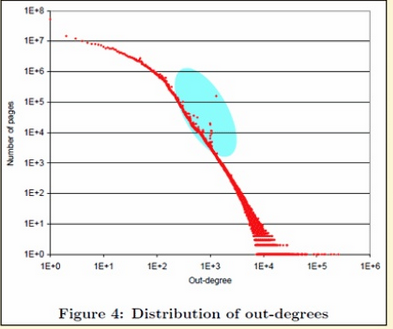
At SMX East, Roger Montti shared this graph showing how easy it is to differentiate unnatural links.

Montti shared mapping data of his own, and explained that he search engines can also easily map and distinguish between sites doing natural link building and those using black hat practices to get ahead artificially. He advised, if brands are using practices that claim to be "SEO-friendly," they are probably barking up the wrong tree with practices intended to game the system.

Know the difference between natural and unnatural link approach:
Some examples of unnatural links include:
  • Overly optimized anchor text in guest posts
  • SEO-friendly anchor text in footers of articles
  • SEO-friendly links in widgets

Many unnatural links stem from strategies that can be used for natural link building. For example, too many optimized anchor text links in guest posts is unnatural, but there is a way to do guest blogging well. (Brafton has covered more insights on search-friendly guest blogging following insights from Matt Cutts.) Montti suggested businesses consider more optimal steps in a guest post strategy:

  • Find a relevant publisher
  • Agree to its authorship and byline standards
  • Do not start by soliciting links
  • Consider an underserved niche topic to write about

He offered several other natural link building tips that marketers should familiarize themselves with, including industry "membership."

  • Identify and join respected industry organization with a web presence
  • Update website with badges, citations, etc. for groups a brand (giving a link to potential earn one back)
Give users what they want and they will create links naturally

In a world where it's clear which sites are employing white hat practices to build page authority, the only way to win is to create content that's truly useful. Brands creating resources that appeal to target audiences' interests and answer prospects' questions give their readers a reason to link back to landing pages and share content with others.

Thom Disch, CEO of Handi-Ramp asserts the only way to earn links is to give people something they want. The key to staying Penguin-proof is to offer value in the form of information.

Marketers must create links naturally rather than furnishing spammy link profiles.

"Links are the currency of search engines, [but] link building is bad," said Disch.

We are entering an era in which brands must evaluate their web content based on whether it's in line with Google's goals. That is, does it provide site visitors with the best possible experience? If not, it will be hard to generate links naturally.

Join communities to build content advocates

Search engines can punish domains for using spammy practices, but "Google can never penalize relationships," Neal Rodriguez, Managing Director for Shovecome pointed out.

Basically, marketers don't have to sit and wait for internet users to discover brand content and then create links back to it. Social networks and other sites put content in front of web audiences and help publishers build relationships with readers. Eventually, those fans and followers will promote the content independently, fueling healthy backlink profiles.

To capitalize on communities, he also offered some general tips about building publisher relationships:

Work for free: Offer a free service (optimization, graphic design, audit) for a publisher

  • Know who's an influencer: Identify people who can be useful contacts in your industry and the media
  • Work for free: Offer a free service (optimization, graphic design, audit) for a publisher
  • Do a favor: Rodriguez even suggested traditional offline networking to bring the network online, joking "buy a publisher a drink" or "drive them to the airport"

The resounding message is that link building is out and community forming is in. Marketers who want to steer clear of Penguin violations will need to focus on giving their readers content that's valuable and worth referencing.

Media files:
Google-Penguins.png (image/png, 0.4 MB)
You are receiving this email because you subscribed to this feed at blogtrottr.com.

If you no longer wish to receive these emails, you can unsubscribe from this feed, or manage all your subscriptions

Brafton: Talking SEO at #SMX: What search ranking factors matter most?

Brafton
News Content Marketing 
Retargeting on Facebook?

Get more sales and conversions with Facebook retargeting. Try it free for 14 days. Set up takes just minutes!
From our sponsors
Talking SEO at #SMX: What search ranking factors matter most?
Oct 2nd 2013, 12:34, by Katherine Griwert

SEO Ranking factors SMX

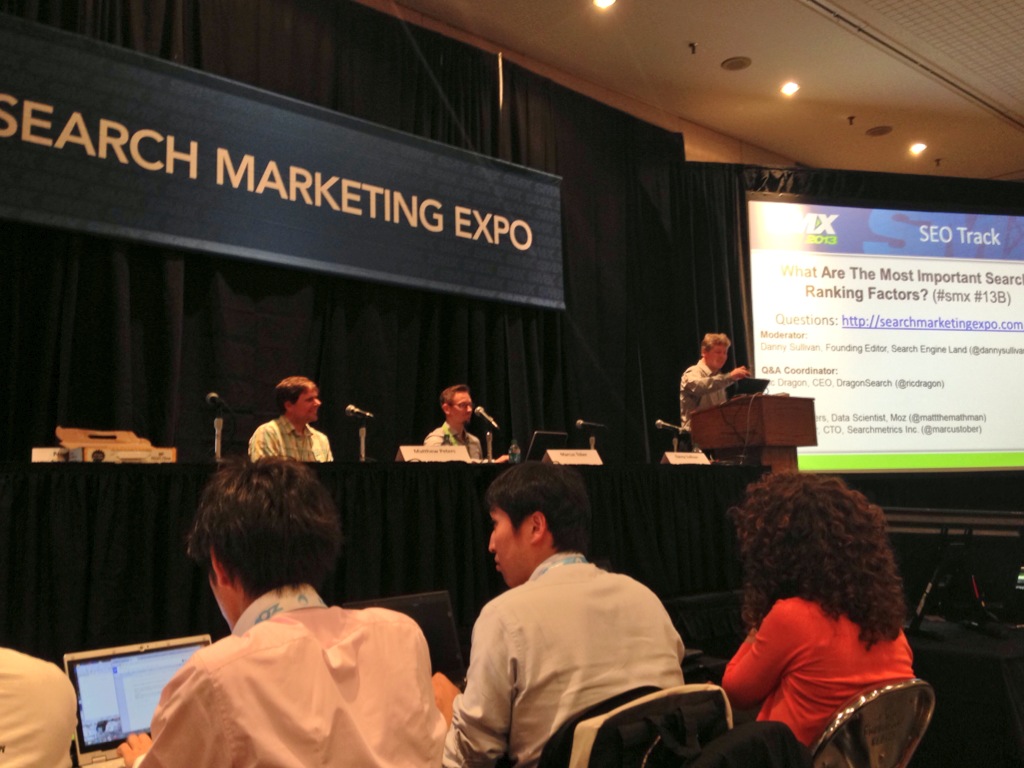
If you're following the algorithms, SEO is a moving target: Google proves it's constantly refining the way it serves results to users. It's clear from new algorithms (like last week's Hummingbird) plus other curveballs (rise of keyword (not provided), anyone?) that the search giant expects marketers be equally vigilant with their digital strategies to stay on top of SERPs. At SMX East, two data scientists tried to unlock the mystery of ranking factors to streamline SEO efforts or priorities.

First up, Moz Data Scientist Matthew Peters provided an in-depth look at the latest Moz Rankings Factors Report, surveying more than 120 respondents on 80+ ranking factors and analyzing 14,000+ keyword results. Then Marcus Tober, CTO of Searchmetrics, offered his company's data around organic results on the top 3 SERPs for more than 10,000 keywords. 

Finding the factors that matter for ranking

Peters pointed out that there are four clues to what drives ranking – and some of the clues are not accessible to marketers. At play:

  • What Google says is in the algorithm
  • What SEO specialists say are in the algorithm
  • What's actually in the algorithm
  • What the stats point to through correlations

While Peters feels stats are the surest signals of ranking factors, he pointed out that it's rare that the numbers can surely identify correlation and causation (as he feels they do with links), but correlation can often give more hints at causation. For instance, the study found longer pages tend to rank higher and they tend to get more links. Perhaps they rank higher because they get more links (not because they are longer).

Links – ranking impact

Both studies found links are highly valuable. In spite of what Matt Cutt says about marketers' common SEO mistakes commonly revolving around link building, Peters called links the most correlating fator in the study). The authority of links is key, with diversity and volume factoring into rankings.

Toby also pointed out that he found more "No-follow" links on Page 1 results than in previous studies.

When asked, how valuable is internal linking?

Both data scientists agreed: very important.

Which are more important internal or external links?

Both: External

Brand mentions matter

Perhaps supporting Toby's data on more "no-follow" links around Page 1 results, Peters found fresh mentions of domain correlate though these may include a reference  - not a link.

Domain or Page authority – which matters more?

Peters said for an individual page's ranking in SERPs, page authority matters more. Overall, domain authority has a big impact.

Exact/ partial match anchor text – impact debated

Peters found the anchor text  - partial and exact match – was also highly correlated to ranking. Even in the face of the Penguin roll out. Though he offered a disclaimer: Disclaimer: Navigational queries (not "corrected for" in the study) tend to have a natural use of exact match anchor text (like linking to Facebook on the word Facebook). This could be why exact match performed so well.

Toby pointed out that his data shows a waning influence of anchor text over time in the face of Penguin, especially from 2012 to 2013. He went into detail of showing how algorithms seem to impact the importance of different variables over time, and suggested exact match anchor text is dying out because of Penguin. "Your site has to lose a lot of weight in bad, spam links with exact match if you want to rank in search," he said.

Site speed – no impact on rankings?

Peters did not find a significant correlation between site speed and rankings, but he was quick to point out :

  • 40% of customers will abandon any site that takes longer than 3 seconds to load
  • For every second of load time, conversions drop 7%

Exact Match domain – a comeback* on ranking influence

Peters found that exact match domain is just as important now as ever for keyword rankings, but this hasn't been consistent. A dip in exact match's influence correlates with when when Matt Cutts announced an exact match domain algorithm to remove low-quality EMDs.

*Why the comeback? His new data suggests removing the low quality exact domains left the strongest EMDs to dominate.

Social – counts, but how much?

Peters study has already sparked controversy in the search (and marketing) community: Moz data suggests +1 have a statistically positive correlation with rankings. And he suggests this could be correlation hinting at a harder to identify cause beyond the +1's.

"I know +1's influence result positions: I can verify this with my eyes." - Danny Sullivan

Toby also confirmed that +1's "definitely" have the highest correlation of social signals in ranking according to Searchmetrics data. (And Facebook data had a high correlation for Bing rankings.) He put it well when he compared SEO success to the TV show - The X Factor. There are the judges (ie: Bing or Google algorithms – perhaps even Larry Page, himself, and then there are the fans. The judges are the gateway, but the ultimate reach and success of X Factor contestants is tied to their ability to connect with the fans (searchers, social followers and general web users in the SEO world). Even in a "de-personalized" sense, if a result is clicked more and ranks higher because of click votes, it's hard to get aggregate data about the clicks a result gets.

While the data scientists tried to qualify their responses, Danny Sullivan said, "I know +1's influence result positions: I can verify this with my eyes." He was referring to "logged in" searches – which the tests tried to control against. Overall, Sullivan's conclusions raised the collective question: Why focus on ranking factors when no two searchers will see the same results?

Do "de-personalized" ranking factors matter in a personalized search world?

Session moderator and SearchEngineLand founder Danny Sullivan pointed out that statistically correcting for social data or local results creates a SERP experience that would be hard to replicate in the real world. More, from a previous SMX conference, Google's Jack Menzel said search doesn't happen in a vacuum, when explaining personalization at play on SERPs.

At the same time, Sullivan and the data scientists agreed that it's useful to consider the weight of on-page, or link-related ranking factors as well as the potential "de-personalized" impact of different social activity as a starting point. As Matt Cutts has said, links aren't going away anytime soon… but the predictions about future search ranking factors hint some marketers might they they're value is diminishing.

Future SEO: Survey says non-traditional ranking factors to rise

Peters pointed out that survey respondents believe non-traditional ranking factors are expected to decrease in ranking value. Even while the data shows EMD, anchor text, etc continue to have statistical correlation, the marketers themselves predict these elements lose rank influence over time.

 Instead, marketers predict content's unique value to users, Google's Authorship, etc, will become more important over time.

Content – even more important moving forward

The panelists agree that value, quality, authority of website content will be more important moving forward. Tober pointed out, "Everyone thinks they have great content, but clearly not everyone can have great content. Let the social signals – the user signals – be the guide."  

Danny Sullivan also raised the discussion that sites can't be providers of facts, they have to be providers of insights. Even if coering publiclty available information, his comment raised the need for creative angles and editorial strategies that help position the information in a more useful way. If you have a celebrity birthday site, you can't just list when a birthday falls. Try to get at something a little harder to find, so your site offers something exclusive– ie: What did they did the celebrity get forhis birthday, or what did other celebrities say to him through social media on his birthday?

Matthew Peters also advised brands start with good content, and then connect with the community in their fields. (Read more in Brafton's related SMX coverage of link building tips.)

Mobile – more important moving forward

"If there's a significant amount of traffic on a well-designed mobile site and people are having good experiences and using it, then it makes sense that it will rank well for mobile." - Matthew Peters

Mobile sites with responsive design seem to do better for mobile search, says Marcus Tober, but Peters has no conclusive research on this point.

As Peters said, if there's a significant amount of traffic on a well-designed mobile site and people are having good experiences and using it, then it makes sense that it will rank well for mobile. At an earlier conference this month, Matt Cutts hinted that mobile optimization could be more important over time.

For more, check out Cutts' insights on mobile and Google as an "editor" of good content on the web.

Media files:
SEO-Ranking-factors-session-SMX.jpg (image/jpeg, 0.2 MB)
You are receiving this email because you subscribed to this feed at blogtrottr.com.

If you no longer wish to receive these emails, you can unsubscribe from this feed, or manage all your subscriptions

Tuesday, 1 October 2013

Brafton: Google to marketers: YouTube drives cross-device engagement

Brafton
News Content Marketing 
Want new traffic sources?

Download a copy of our complimentary eBook today, and read about sources that most marketers are not aware of.
From our sponsors
Google to marketers: YouTube drives cross-device engagement
Oct 1st 2013, 21:22, by Lauren Kaye

YouTube channels carry viewers across channels.

It's clear that Americans are watching more video content online, but how do brands ensure they consistently engage viewers who are prospects? ComScore's latest Video Metrix data for shows that 87 percent of Americans watched 46.7 billion online videos in August 2013. The vast majority - 14.7 billion videos - were accessed on Google sites (including YouTube), where savvy brands have established Channels. Now Google is reminding brands that Channels can keep them connected to desirable viewers.

In a recent interview with eMarketer, YouTube's Content Strategy Director Jamie Byrne explained why Channels are more than a way to organize the video marketing collateral they produce. Channels also pose engagement opportunities in a multichannel world. Whereas YouTube was once a vast ocean of video content that users would have to sift through to find relevant clips, it's now structured in a way that keeps screen-switching consumers connected.

"[Channels] help users find the content they love and stay engaged with it, regardless of what platform they happen to be on. So if you're on your PC or laptop, and you subscribe to a Channel and then pick up your phone or tablet, that subscription carries through," Byrne said.

Essentially, this method of organizing content gives brands incentive to create relevant, top-of-funnel and share-friendly video series. Creating engagement-focused clips and developing a strategy to nurture the full prospect-to-customer journey is more effective than crafting one-off videos that attempt to make a hard sell.

The direction YouTube and online videos are headed points toward the marriage of highly creative concepts and commercial initiatives, according to Byrne. He said YouTube is opening a creator space in New York that puts brands and content innovators under the same roof.

Marketers must maintain a proper balance between inventive originality and corporate goals as they develop video marketing campaigns to earn audience engagement and drive content ROI.

Learn more about engaging and results-focused strategies in Brafton's latest on-demand webinar.

Media files:
shutterstock_84026515.jpg (image/jpeg, 0.2 MB)
You are receiving this email because you subscribed to this feed at blogtrottr.com.

If you no longer wish to receive these emails, you can unsubscribe from this feed, or manage all your subscriptions

Brafton: Google’s new mobile interface: Favoring ads over organic?

Brafton
News Content Marketing 
Learn from successful entrepreneurs.

Pick up tips and advice from the noteworthy when you subscribe to Startup Frontier! Read interviews on how they launched and built their businesses.
From our sponsors
Google's new mobile interface: Favoring ads over organic?
Oct 1st 2013, 14:51, by Lauren Kaye

Google's mobile search results prioritize paid ads.

The SEO world was abuzz last week with news that Google had quietly introduced its new Hummingbird algorithm, which ranks online content based on its ability to answer complex questions. (Check out this Brafton article for more detailed coverage of the announcement.) However, the news about Hummingbird shouldn't overshadow other changes announced at the search engine's 15th birthday celebration. A new mobile interface that optimizes user experience on smartphones and tablets is being rolled out on a wide scale, and it appears to prioritize paid ads over organic content.

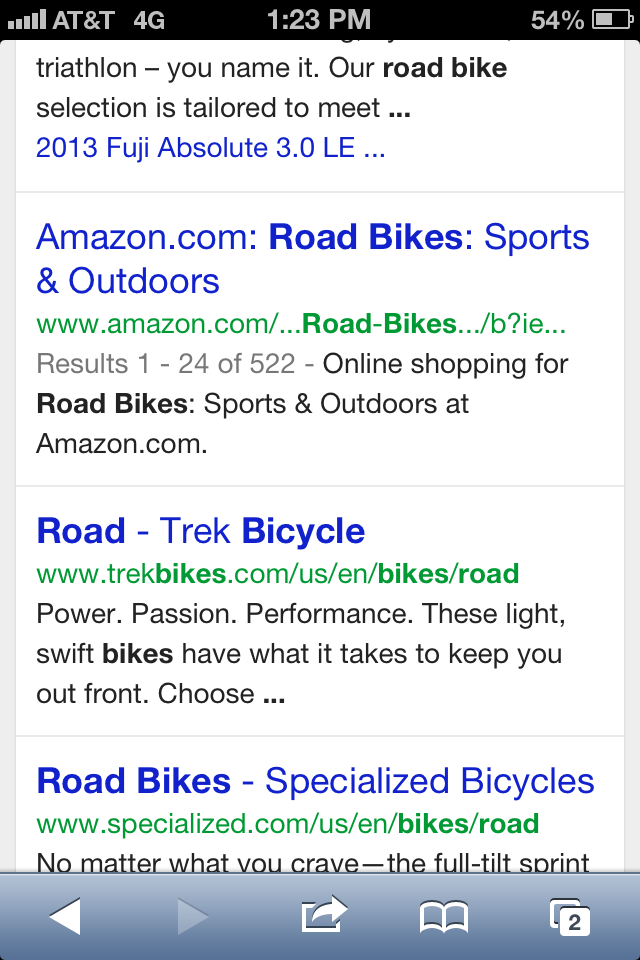
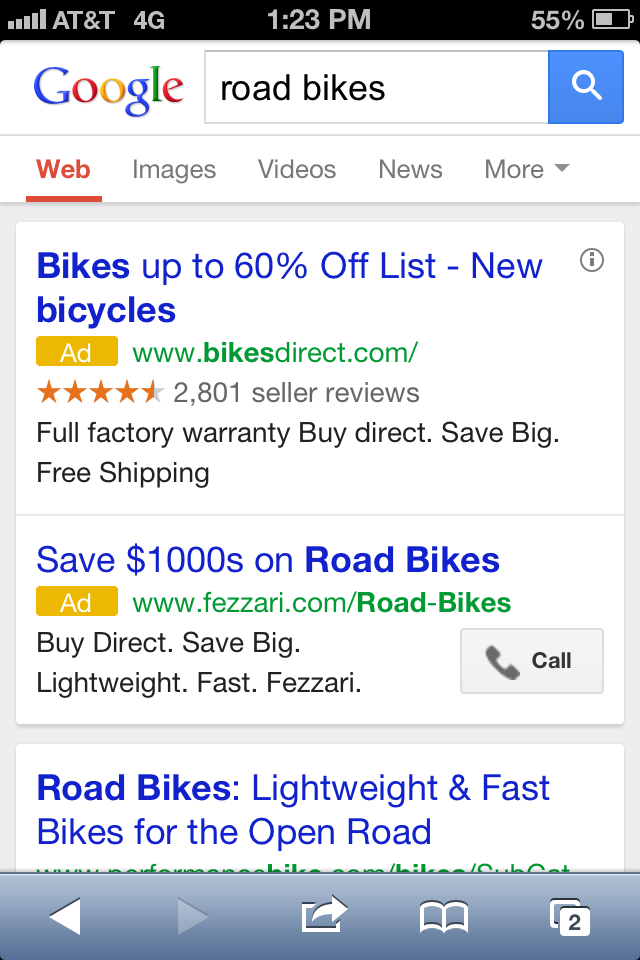
A smartphone search for road bikes in the new "Unified Design" interface yields three results above the fold - two paid ads and one organic result. That means consumers seeking fast answers will need to scroll through multiple screens to find natural results for their queries.

Google's new mobile interface displays organic content below paid ads.

It seems that with this update, marketers hoping to keep their branded content at the top of mobile SERPs will need to dominate for targeted search terms or invest in sponsored ad space. Of course, Google won't let companies buy their way to the top of small screens. Only domains with excellent Quality Scores are given priority real estate in any SERP, desktop or tablet.

It's also worth noting that the ads were displayed with an orange label - perhaps in an effort to comply with the FTC's demands that all sponsored content be clearly marked. This could help organic brands win mobile clicks even if they're below the fold as studies have shown consumers are more likely to click organic results than ads.

Even if paid content is receiving more face time in mobile search results, marketers must continue to do what they've always done - optimize their content for users. If a brand is consistently creating excellent resources that give searches the answers they want, their content will get the attention it deserves.

Media files:
bikesearch.png (image/png, 0.1 MB)
You are receiving this email because you subscribed to this feed at blogtrottr.com.

If you no longer wish to receive these emails, you can unsubscribe from this feed, or manage all your subscriptions