Wednesday, 2 October 2013

Brafton: The key to Penguin-proof links? #SMX speakers say: Create communities

Brafton
News Content Marketing 
An aspiring entrepreneur?

Learn about how top Silicon Valley entrepreneurs grew their businesses in our free ebook.
From our sponsors
The key to Penguin-proof links? #SMX speakers say: Create communities
Oct 2nd 2013, 13:30, by Lauren Kaye

Marketers must develop new approaches to links in order to win in a post-Penguin world.

The ire of Google's Penguin algorithm is still fresh in marketers' minds and many now approach link strategies with caution. Google's Search Engineer Matt Cutts has said links will continue to play an important role in success for years to come, and the speakers at SMX East's Penguin-Proof Link Building session agree: Brands must learn how to play by the search engine's rules to corral references and earn link juice without incurring penalties.

Don't manipulate the algorithm

According to Roger Montti, owner of MartiniBuster, spammy link building practices became more prominent after Google began to factor links more heavily into search rankings. Rather than accepting that links would henceforth have greater sway over SERP visibility, SEOs attempted to generate a higher volume of links to overcompensate. Montti found that many marketers thought a full backlink profile (perhaps including spammy references) was better than a sparse sampling, even if it was a more accurate representation of unsolicited links.

He defined natural links as: Links that are given as part of an independent editorial choice in the context of a recommendation.

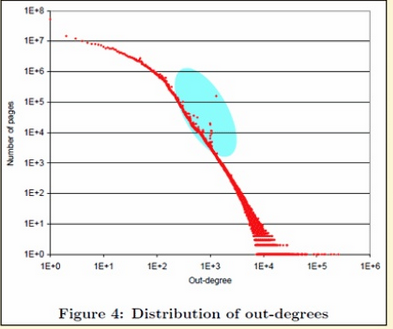
At SMX East, Roger Montti shared this graph showing how easy it is to differentiate unnatural links.

Montti shared mapping data of his own, and explained that he search engines can also easily map and distinguish between sites doing natural link building and those using black hat practices to get ahead artificially. He advised, if brands are using practices that claim to be "SEO-friendly," they are probably barking up the wrong tree with practices intended to game the system.

Know the difference between natural and unnatural link approach:
Some examples of unnatural links include:
  • Overly optimized anchor text in guest posts
  • SEO-friendly anchor text in footers of articles
  • SEO-friendly links in widgets

Many unnatural links stem from strategies that can be used for natural link building. For example, too many optimized anchor text links in guest posts is unnatural, but there is a way to do guest blogging well. (Brafton has covered more insights on search-friendly guest blogging following insights from Matt Cutts.) Montti suggested businesses consider more optimal steps in a guest post strategy:

  • Find a relevant publisher
  • Agree to its authorship and byline standards
  • Do not start by soliciting links
  • Consider an underserved niche topic to write about

He offered several other natural link building tips that marketers should familiarize themselves with, including industry "membership."

  • Identify and join respected industry organization with a web presence
  • Update website with badges, citations, etc. for groups a brand (giving a link to potential earn one back)
Give users what they want and they will create links naturally

In a world where it's clear which sites are employing white hat practices to build page authority, the only way to win is to create content that's truly useful. Brands creating resources that appeal to target audiences' interests and answer prospects' questions give their readers a reason to link back to landing pages and share content with others.

Thom Disch, CEO of Handi-Ramp asserts the only way to earn links is to give people something they want. The key to staying Penguin-proof is to offer value in the form of information.

Marketers must create links naturally rather than furnishing spammy link profiles.

"Links are the currency of search engines, [but] link building is bad," said Disch.

We are entering an era in which brands must evaluate their web content based on whether it's in line with Google's goals. That is, does it provide site visitors with the best possible experience? If not, it will be hard to generate links naturally.

Join communities to build content advocates

Search engines can punish domains for using spammy practices, but "Google can never penalize relationships," Neal Rodriguez, Managing Director for Shovecome pointed out.

Basically, marketers don't have to sit and wait for internet users to discover brand content and then create links back to it. Social networks and other sites put content in front of web audiences and help publishers build relationships with readers. Eventually, those fans and followers will promote the content independently, fueling healthy backlink profiles.

To capitalize on communities, he also offered some general tips about building publisher relationships:

Work for free: Offer a free service (optimization, graphic design, audit) for a publisher

  • Know who's an influencer: Identify people who can be useful contacts in your industry and the media
  • Work for free: Offer a free service (optimization, graphic design, audit) for a publisher
  • Do a favor: Rodriguez even suggested traditional offline networking to bring the network online, joking "buy a publisher a drink" or "drive them to the airport"

The resounding message is that link building is out and community forming is in. Marketers who want to steer clear of Penguin violations will need to focus on giving their readers content that's valuable and worth referencing.

Media files:
Google-Penguins.png (image/png, 0.4 MB)
You are receiving this email because you subscribed to this feed at blogtrottr.com.

If you no longer wish to receive these emails, you can unsubscribe from this feed, or manage all your subscriptions

Brafton: Talking SEO at #SMX: What search ranking factors matter most?

Brafton
News Content Marketing 
Retargeting on Facebook?

Get more sales and conversions with Facebook retargeting. Try it free for 14 days. Set up takes just minutes!
From our sponsors
Talking SEO at #SMX: What search ranking factors matter most?
Oct 2nd 2013, 12:34, by Katherine Griwert

SEO Ranking factors SMX

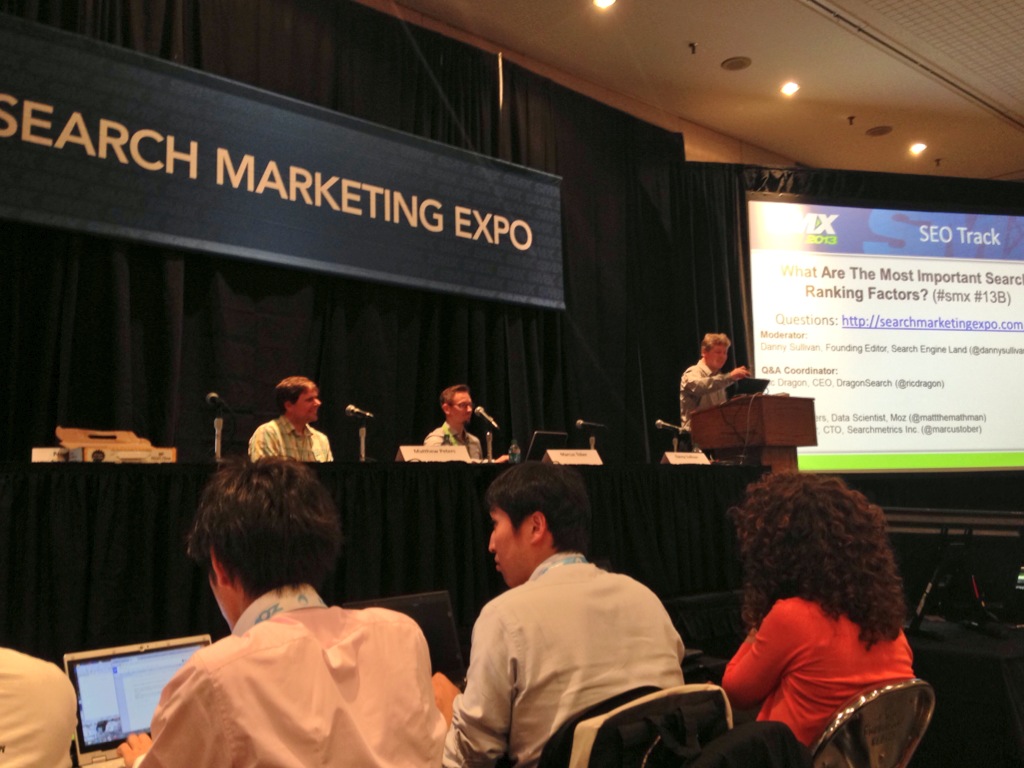
If you're following the algorithms, SEO is a moving target: Google proves it's constantly refining the way it serves results to users. It's clear from new algorithms (like last week's Hummingbird) plus other curveballs (rise of keyword (not provided), anyone?) that the search giant expects marketers be equally vigilant with their digital strategies to stay on top of SERPs. At SMX East, two data scientists tried to unlock the mystery of ranking factors to streamline SEO efforts or priorities.

First up, Moz Data Scientist Matthew Peters provided an in-depth look at the latest Moz Rankings Factors Report, surveying more than 120 respondents on 80+ ranking factors and analyzing 14,000+ keyword results. Then Marcus Tober, CTO of Searchmetrics, offered his company's data around organic results on the top 3 SERPs for more than 10,000 keywords. 

Finding the factors that matter for ranking

Peters pointed out that there are four clues to what drives ranking – and some of the clues are not accessible to marketers. At play:

  • What Google says is in the algorithm
  • What SEO specialists say are in the algorithm
  • What's actually in the algorithm
  • What the stats point to through correlations

While Peters feels stats are the surest signals of ranking factors, he pointed out that it's rare that the numbers can surely identify correlation and causation (as he feels they do with links), but correlation can often give more hints at causation. For instance, the study found longer pages tend to rank higher and they tend to get more links. Perhaps they rank higher because they get more links (not because they are longer).

Links – ranking impact

Both studies found links are highly valuable. In spite of what Matt Cutt says about marketers' common SEO mistakes commonly revolving around link building, Peters called links the most correlating fator in the study). The authority of links is key, with diversity and volume factoring into rankings.

Toby also pointed out that he found more "No-follow" links on Page 1 results than in previous studies.

When asked, how valuable is internal linking?

Both data scientists agreed: very important.

Which are more important internal or external links?

Both: External

Brand mentions matter

Perhaps supporting Toby's data on more "no-follow" links around Page 1 results, Peters found fresh mentions of domain correlate though these may include a reference  - not a link.

Domain or Page authority – which matters more?

Peters said for an individual page's ranking in SERPs, page authority matters more. Overall, domain authority has a big impact.

Exact/ partial match anchor text – impact debated

Peters found the anchor text  - partial and exact match – was also highly correlated to ranking. Even in the face of the Penguin roll out. Though he offered a disclaimer: Disclaimer: Navigational queries (not "corrected for" in the study) tend to have a natural use of exact match anchor text (like linking to Facebook on the word Facebook). This could be why exact match performed so well.

Toby pointed out that his data shows a waning influence of anchor text over time in the face of Penguin, especially from 2012 to 2013. He went into detail of showing how algorithms seem to impact the importance of different variables over time, and suggested exact match anchor text is dying out because of Penguin. "Your site has to lose a lot of weight in bad, spam links with exact match if you want to rank in search," he said.

Site speed – no impact on rankings?

Peters did not find a significant correlation between site speed and rankings, but he was quick to point out :

  • 40% of customers will abandon any site that takes longer than 3 seconds to load
  • For every second of load time, conversions drop 7%

Exact Match domain – a comeback* on ranking influence

Peters found that exact match domain is just as important now as ever for keyword rankings, but this hasn't been consistent. A dip in exact match's influence correlates with when when Matt Cutts announced an exact match domain algorithm to remove low-quality EMDs.

*Why the comeback? His new data suggests removing the low quality exact domains left the strongest EMDs to dominate.

Social – counts, but how much?

Peters study has already sparked controversy in the search (and marketing) community: Moz data suggests +1 have a statistically positive correlation with rankings. And he suggests this could be correlation hinting at a harder to identify cause beyond the +1's.

"I know +1's influence result positions: I can verify this with my eyes." - Danny Sullivan

Toby also confirmed that +1's "definitely" have the highest correlation of social signals in ranking according to Searchmetrics data. (And Facebook data had a high correlation for Bing rankings.) He put it well when he compared SEO success to the TV show - The X Factor. There are the judges (ie: Bing or Google algorithms – perhaps even Larry Page, himself, and then there are the fans. The judges are the gateway, but the ultimate reach and success of X Factor contestants is tied to their ability to connect with the fans (searchers, social followers and general web users in the SEO world). Even in a "de-personalized" sense, if a result is clicked more and ranks higher because of click votes, it's hard to get aggregate data about the clicks a result gets.

While the data scientists tried to qualify their responses, Danny Sullivan said, "I know +1's influence result positions: I can verify this with my eyes." He was referring to "logged in" searches – which the tests tried to control against. Overall, Sullivan's conclusions raised the collective question: Why focus on ranking factors when no two searchers will see the same results?

Do "de-personalized" ranking factors matter in a personalized search world?

Session moderator and SearchEngineLand founder Danny Sullivan pointed out that statistically correcting for social data or local results creates a SERP experience that would be hard to replicate in the real world. More, from a previous SMX conference, Google's Jack Menzel said search doesn't happen in a vacuum, when explaining personalization at play on SERPs.

At the same time, Sullivan and the data scientists agreed that it's useful to consider the weight of on-page, or link-related ranking factors as well as the potential "de-personalized" impact of different social activity as a starting point. As Matt Cutts has said, links aren't going away anytime soon… but the predictions about future search ranking factors hint some marketers might they they're value is diminishing.

Future SEO: Survey says non-traditional ranking factors to rise

Peters pointed out that survey respondents believe non-traditional ranking factors are expected to decrease in ranking value. Even while the data shows EMD, anchor text, etc continue to have statistical correlation, the marketers themselves predict these elements lose rank influence over time.

 Instead, marketers predict content's unique value to users, Google's Authorship, etc, will become more important over time.

Content – even more important moving forward

The panelists agree that value, quality, authority of website content will be more important moving forward. Tober pointed out, "Everyone thinks they have great content, but clearly not everyone can have great content. Let the social signals – the user signals – be the guide."  

Danny Sullivan also raised the discussion that sites can't be providers of facts, they have to be providers of insights. Even if coering publiclty available information, his comment raised the need for creative angles and editorial strategies that help position the information in a more useful way. If you have a celebrity birthday site, you can't just list when a birthday falls. Try to get at something a little harder to find, so your site offers something exclusive– ie: What did they did the celebrity get forhis birthday, or what did other celebrities say to him through social media on his birthday?

Matthew Peters also advised brands start with good content, and then connect with the community in their fields. (Read more in Brafton's related SMX coverage of link building tips.)

Mobile – more important moving forward

"If there's a significant amount of traffic on a well-designed mobile site and people are having good experiences and using it, then it makes sense that it will rank well for mobile." - Matthew Peters

Mobile sites with responsive design seem to do better for mobile search, says Marcus Tober, but Peters has no conclusive research on this point.

As Peters said, if there's a significant amount of traffic on a well-designed mobile site and people are having good experiences and using it, then it makes sense that it will rank well for mobile. At an earlier conference this month, Matt Cutts hinted that mobile optimization could be more important over time.

For more, check out Cutts' insights on mobile and Google as an "editor" of good content on the web.

Media files:
SEO-Ranking-factors-session-SMX.jpg (image/jpeg, 0.2 MB)
You are receiving this email because you subscribed to this feed at blogtrottr.com.

If you no longer wish to receive these emails, you can unsubscribe from this feed, or manage all your subscriptions

Tuesday, 1 October 2013

Brafton: Google to marketers: YouTube drives cross-device engagement

Brafton
News Content Marketing 
Want new traffic sources?

Download a copy of our complimentary eBook today, and read about sources that most marketers are not aware of.
From our sponsors
Google to marketers: YouTube drives cross-device engagement
Oct 1st 2013, 21:22, by Lauren Kaye

YouTube channels carry viewers across channels.

It's clear that Americans are watching more video content online, but how do brands ensure they consistently engage viewers who are prospects? ComScore's latest Video Metrix data for shows that 87 percent of Americans watched 46.7 billion online videos in August 2013. The vast majority - 14.7 billion videos - were accessed on Google sites (including YouTube), where savvy brands have established Channels. Now Google is reminding brands that Channels can keep them connected to desirable viewers.

In a recent interview with eMarketer, YouTube's Content Strategy Director Jamie Byrne explained why Channels are more than a way to organize the video marketing collateral they produce. Channels also pose engagement opportunities in a multichannel world. Whereas YouTube was once a vast ocean of video content that users would have to sift through to find relevant clips, it's now structured in a way that keeps screen-switching consumers connected.

"[Channels] help users find the content they love and stay engaged with it, regardless of what platform they happen to be on. So if you're on your PC or laptop, and you subscribe to a Channel and then pick up your phone or tablet, that subscription carries through," Byrne said.

Essentially, this method of organizing content gives brands incentive to create relevant, top-of-funnel and share-friendly video series. Creating engagement-focused clips and developing a strategy to nurture the full prospect-to-customer journey is more effective than crafting one-off videos that attempt to make a hard sell.

The direction YouTube and online videos are headed points toward the marriage of highly creative concepts and commercial initiatives, according to Byrne. He said YouTube is opening a creator space in New York that puts brands and content innovators under the same roof.

Marketers must maintain a proper balance between inventive originality and corporate goals as they develop video marketing campaigns to earn audience engagement and drive content ROI.

Learn more about engaging and results-focused strategies in Brafton's latest on-demand webinar.

Media files:
shutterstock_84026515.jpg (image/jpeg, 0.2 MB)
You are receiving this email because you subscribed to this feed at blogtrottr.com.

If you no longer wish to receive these emails, you can unsubscribe from this feed, or manage all your subscriptions

Brafton: Google’s new mobile interface: Favoring ads over organic?

Brafton
News Content Marketing 
Learn from successful entrepreneurs.

Pick up tips and advice from the noteworthy when you subscribe to Startup Frontier! Read interviews on how they launched and built their businesses.
From our sponsors
Google's new mobile interface: Favoring ads over organic?
Oct 1st 2013, 14:51, by Lauren Kaye

Google's mobile search results prioritize paid ads.

The SEO world was abuzz last week with news that Google had quietly introduced its new Hummingbird algorithm, which ranks online content based on its ability to answer complex questions. (Check out this Brafton article for more detailed coverage of the announcement.) However, the news about Hummingbird shouldn't overshadow other changes announced at the search engine's 15th birthday celebration. A new mobile interface that optimizes user experience on smartphones and tablets is being rolled out on a wide scale, and it appears to prioritize paid ads over organic content.

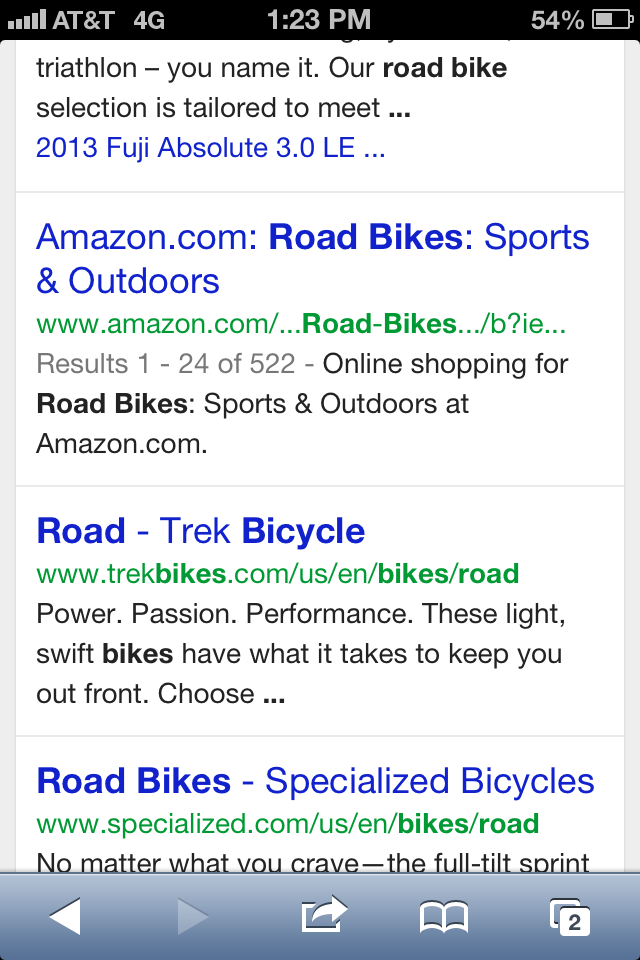
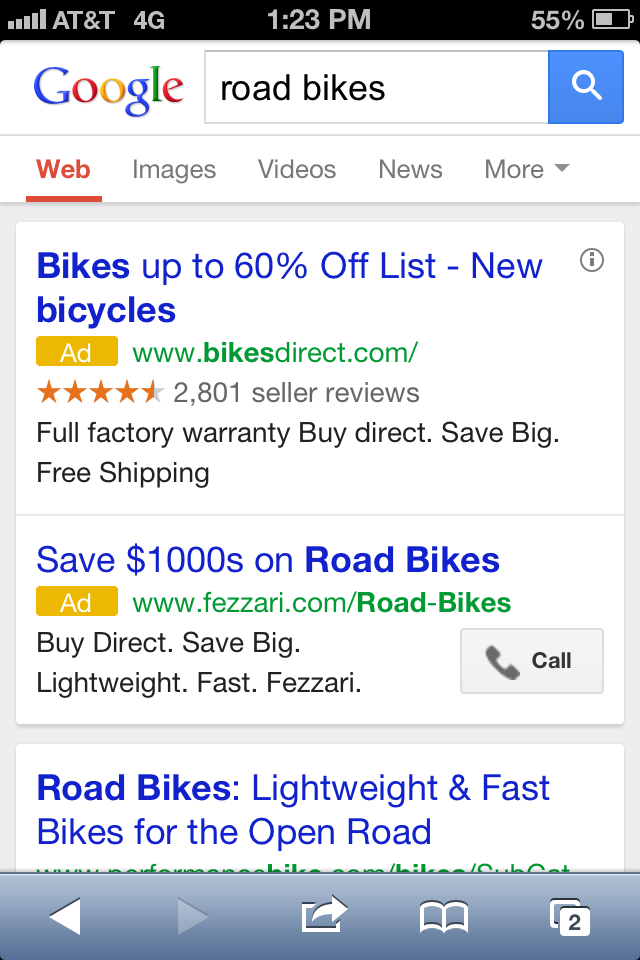
A smartphone search for road bikes in the new "Unified Design" interface yields three results above the fold - two paid ads and one organic result. That means consumers seeking fast answers will need to scroll through multiple screens to find natural results for their queries.

Google's new mobile interface displays organic content below paid ads.

It seems that with this update, marketers hoping to keep their branded content at the top of mobile SERPs will need to dominate for targeted search terms or invest in sponsored ad space. Of course, Google won't let companies buy their way to the top of small screens. Only domains with excellent Quality Scores are given priority real estate in any SERP, desktop or tablet.

It's also worth noting that the ads were displayed with an orange label - perhaps in an effort to comply with the FTC's demands that all sponsored content be clearly marked. This could help organic brands win mobile clicks even if they're below the fold as studies have shown consumers are more likely to click organic results than ads.

Even if paid content is receiving more face time in mobile search results, marketers must continue to do what they've always done - optimize their content for users. If a brand is consistently creating excellent resources that give searches the answers they want, their content will get the attention it deserves.

Media files:
bikesearch.png (image/png, 0.1 MB)
You are receiving this email because you subscribed to this feed at blogtrottr.com.

If you no longer wish to receive these emails, you can unsubscribe from this feed, or manage all your subscriptions

Monday, 30 September 2013

Brafton: Brafton talks content marketing at SMX East 2013 #smxeast

Brafton
News Content Marketing 
Helpdesk Ticketing System

Award-winning helpdesk system with an inbuilt KBase, forums, canned responses & more. Try super user friendly Freshdesk today. (In 2 minutes, You'll set it up!)
From our sponsors
Brafton talks content marketing at SMX East 2013 #smxeast
Sep 30th 2013, 19:16, by Lauren Kaye

Brafton is attending this week's SMX East Conference.

SMX East 2013 kicks off Tuesday October 1 in New York City and Brafton will be in attendance to discuss SEO and content marketing. The world's leading search engine marketing conference will be held at the Jacob K. Javitz Center between October 1-3. Keynote speakers including Search Engine Land's Danny Sullivan and Twitter's Vice President of Global Online Sales Richard Alfonsi will offer insights about how to create winning campaigns in the evolving internet landscape.

Sullivan will get attendees engaged with an evening forum on Tuesday, October 1. The interactive session invites participants to shape the conversation, sharing the tactics, ideas and expertise that help them stay ahead in the competitive search world. Alfonsi opens day two with a presentation about how Twitter supports internet marketing campaigns, especially as the social network introduces new advertising opportunities that capitalize on users' behaviors.

The three-day event features over 50 sessions covering paid and organic search marketing tactics, from technical integration tips to innovative practices that leverage the latest developments. Brafton's Katherine Griwert will be speaking about the growing importance of video marketing and how marketers can build campaigns that drive ongoing ROI. Griwert will speak at 11:40 a.m. in Theater B.

Brafton will be available October 1 and 2 at Booth 328 to talk content and search marketing strategies.

Media files:
smxeast.png (image/png, 0 MB)
You are receiving this email because you subscribed to this feed at blogtrottr.com.

If you no longer wish to receive these emails, you can unsubscribe from this feed, or manage all your subscriptions

Brafton: Deja duplicate content: Is Google sending a message?

Brafton
News Content Marketing 
An aspiring entrepreneur?

Learn about how top Silicon Valley entrepreneurs grew their businesses in our free ebook.
From our sponsors
Deja duplicate content: Is Google sending a message?
Sep 30th 2013, 17:18, by Lauren Kaye

Google doesn't take a hard a line to duplicate content as SEOs might believe.

Google has made it known that duplicate web content will not be tolerated in search results and it set the Panda algorithm loose to punish domains publishing scraped, copied or otherwise replicated information. Now, it seems the search engine is softening the hard line it once drew against duplicate content.

A recent Webmaster Help Channel video is just the latest in a series of clips that offers examples of duplicate content that are not considered punishable, but perfectly acceptable - and in some cases, viewed as improving user experience.

What kind of content might naturally be "duplicated" across the web?
1. Product ingredients lists

In the latest video, Search Engineer Matt Cutts explained that ecommerce sites will not be penalized for posting ingredients lists for products that are also sold on other domains.

"If you're listing something that's vital, so you've got ingredients in food or something like that … [with] short specifications, that probably wouldn't get you into too much of an issue," he reported.

However, it's a different story if you're an ecommerce company that offers the same products as other retail sites and you publish the same descriptions as competitors. In Google's eyes, you're not providing visitors with much added value and your content might not rank as highly.

Cutts pointed out that ecommerce sites featuring product or ingredients lists can further avoid duplicate content issues by publishing short descriptions containing only vital information as well as creating original site designs that differentiate product pages from competitors'.

2. Content on international domains and better IP addresses

Matt Cutts has been building a case about when duplicate web content is OK.

Google previously explained that domains will probably not be punished if they are hosting custom content on multiple domains to improve UX. Cutts explained in a video that hosting the same information on both IPv4 and IPv6 addresses is not seen as a duplicate content violation because it delivers the same information based on users' connectivity capabilities.

Similarly, companies with global audiences that host the same digital content on more than one country-level domain are not seen as spammers. Rather, they are offering resources in the formats that provide internet users with better experiences, a practice that Google upholds and rewards.

3. Technical and legal jargon

Legal boilerplates, disclaimers, terms and conditions and other types of required text are also seen as outside the bounds of Google's duplicate content violations. Brafton covered Cutts' video about why some legal and technical information is OK, in which he explained that failing to include this information verbatim might even compromise a domains' value. Tweaking the text for the sake of originality could introduce inaccuracies.

The SEO industry pays close attention to Google's guidance because repetitive messages are sometimes indicative of a coming change. Perhaps the recurring messages clarifying what's considered duplicate content are related to the latest Panda algorithm update, which softened its impact on previously punished sites. Or, it could indicate that Google is taking a closer look at the actual words on the page to verify marketers aren't turning custom content into spam: Producing original language for SEO gains at the expense of informational value for end-users goes against good content marketing.

Media files:
duplicate-content-not-always-punishable.jpg (image/jpeg, 0.6 MB)
You are receiving this email because you subscribed to this feed at blogtrottr.com.

If you no longer wish to receive these emails, you can unsubscribe from this feed, or manage all your subscriptions

Brafton: SEO life after keyword data

Brafton
News Content Marketing 
An aspiring entrepreneur?

Learn about how top Silicon Valley entrepreneurs grew their businesses in our free ebook.
From our sponsors
SEO life after keyword data
Sep 30th 2013, 13:30, by Lauren Kaye

Missing data from your content analytics reports? Not the end of your SEO strategy.

Hi! Lauren Kaye, here, with this week's Content & Coffee with Brafton. Not to set off any alarms, but you might have seen the wealth of keyword data in your content analytics reports dry up. Click play to watch the full video, or read on below. 

 [sublimevideo poster="http://cdn.brafton.com/wp-content/uploads/2013/09/ContentCoffee-September301.png" src2="(hd)http://videocontent.brafton.com/b9cc69a148bd9f4d/video/custom/mp4/722-2.mp4" src3="http://videocontent.brafton.com/b9cc69a148bd9f4d/video/custom/mp4/722-2.mp4" src5="(hd)http://videocontent.brafton.com/b9cc69a148bd9f4d/video/custom/ogg/722-3.ogg" width="" height=""]

Don't panic - you're not alone - and you're not out of luck.

Webmasters have noticed that Google Analytics is no longer providing keyword data for a growing portion of their organic search site traffic, which leaves them in the dark about which terms are bringing visitors to their landing pages. This news has caught the attention of the search marketing industry because keyword traffic data is a guiding light for SEO and content marketing strategies.

Brafton has been tracking the portion of website traffic for which keyword data is "Not Provided." In the fourth quarter of 2012, 40 percent of searches came in as "Not Provided." In August 2013, this had risen to 49 percent. Now, brands are seeing that 73 percent of Google traffic coming to their pages does not provide keyword data.

Why is Google drastically cutting off the flow of keyword data? There are a couple of theories. Search Engine Land's Danny Sullivan thinks the search engine could be encrypting more data to because of concerns about the NSA spying on users' activity. Some conspiracy theorists think the move aims to incentivize the use of AdWords campaigns because marketers can still retrieve keyword data through its AdWords System.

So where does this leave marketers? The outcome may not be as dire as it seems. At least for now, companies can still use Webmaster Tools for smart keyword tracking, but they can continue to use Google Analytics for granular information to steer their campaigns in the right direction.

Segment off your "Not Provided" traffic and look for other clues that will help you determine what this audience is looking for. Which landing pages do they visit? What links do they click next? By reverse engineering the search process, you can make an educated judgment about the information your visitors are looking for - and that's perhaps more valuable than the keywords. Use these insights to create relevant content to give them useful answers.

Catch you next week, and happy content marketing!

Media files:
ContentCoffee-September301.png (image/png, 0.4 MB)
You are receiving this email because you subscribed to this feed at blogtrottr.com.

If you no longer wish to receive these emails, you can unsubscribe from this feed, or manage all your subscriptions