Wednesday, 1 May 2013

Brafton: B2B social marketing gets visual with new LinkedIn feature

Brafton
News Content Marketing
B2B social marketing gets visual with new LinkedIn feature
May 1st 2013, 21:49

LinkedIn now counts more than 187 million users.

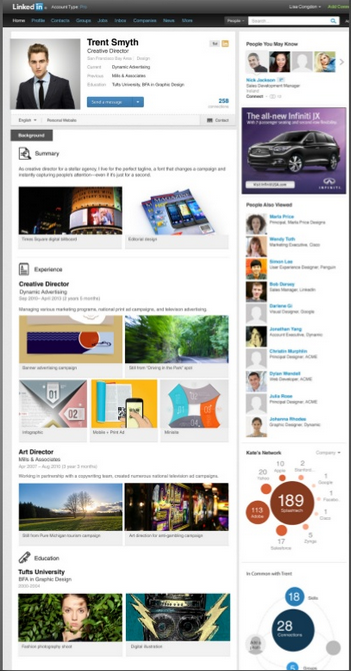
LinkedIn recently announced a new feature that can help companies maximize their social media strategies with visual content. LinkedIn Project Manager Udi Milo posted an article on the professional networking site's blog telling users to "display it" instead of just "saying it" on their pages.

With this new feature, LinkedIn users can build out their pages with rich digital content that complements the information already hosted on their profiles. Analysts can post snippets of annual reports, graphic designers can display infographics and creative directors can showcase images of their work via this new LinkedIn function.

Although the move was meant to help professionals LinkedIn profile with visualsbetter communicate their experiences and skills through engaging imagery, it may ultimately serve a larger purpose in their social media marketing plans. It's well known that visual images draw more clicks than text-only content, but a recent Brafton article explains that certain types of graphic content are gaining attention for their exceptional effectiveness. Brafton covered a Submit In Me case study, which revealed that a company's infographic generated more than 5,000 views and 50 backlinks in five days.

Creating custom infographics to share on companies' websites and post to LinkedIn pages not only gives regular viewers more engaging content, but it can also boost pages' reputations by building backlinks that score higher on Google's search results. This can even be advantageous for companies that may not think their products and services are natural fit for visual marketing.

Big-ticket items like infographics should be part of a content marketing strategy because they attract larger audiences, provide valuable information to viewers and earn shares. To create engaging graphic content, the source recommends companies put a new spin on ideas that have proven successful in the past, or take the risk and create something unconventional that will draw major interest.

Media files:
drop_linkedin.jpg (image/jpeg, 0 MB)
You are receiving this email because you subscribed to this feed at blogtrottr.com.

If you no longer wish to receive these emails, you can unsubscribe from this feed, or manage all your subscriptions

Brafton: Content marketing recap: April 2013

Brafton
News Content Marketing
Content marketing recap: April 2013
May 1st 2013, 20:00

Social content

In April, web marketers were reminded there is no web without content - a poll from the Digital Advertising Alliance found 92 percent Americans agree that free news, blogs, emails and video content are critical to the overall value of the Internet.

There's no successful digital strategy without investment in editorial media.

Here's Brafton's take on the month's biggest content marketing headlines - and how you can use them to update your strategy.

Video content marketing: Growing audiences, rising results

Unruly video sector

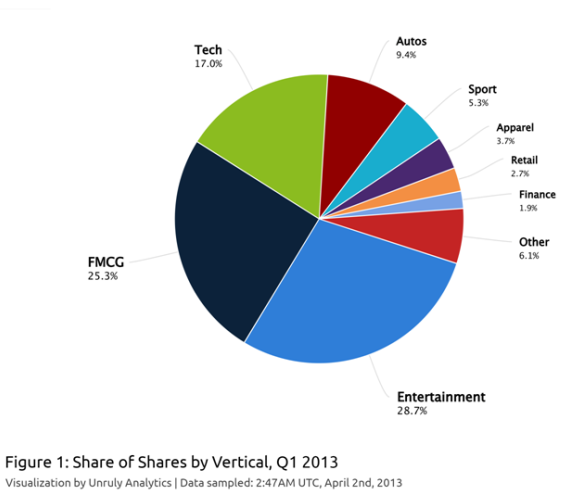
People turn to the web for content, and video is becoming more important for content marketing in any business vertical. An April report from Unruly shows the Entertainment sector still has the largest online video audience, but video sharing for consumer goods, tech and auto brands all experienced growth last quarter.

44% of consumers purchase more products after viewing a related video

Plus, 44 percent of consumers say they've purchased more products after viewing a related video. Companies are wising up, and new Nielsen data shows 64 percent will spend more on video content moving forward.

Investing in videos can have long-term effects; Unruly found the "half life" of video ROI is three weeks - compared to hours or days for many other formats. Social promotion can extend the shelf life of videos and other content, and it seems most brands are already stepping up their social marketing.

Social marketing: Smarter analytics needed 

Nielsen reports 70 percent of brands plan to increase social media use, even as 49 percent of B2Bs still struggle to understand the return on social content. It's a sign that businesses need to hold the people in charge of their social marketing accountable. 

Brafton partners with Sprinklr to provide clients with smarter social analytics.

In-depth reports can measure networks and shared content performance against clearly defined goals for smarter strategies. At Brafton, we overcome this challenge with dedicated social strategists and an in-depth partnership with Sprinklr for reports and analytics.


Content for SEO: Better links and leads

One area where B2B and B2C companies see clear ROI is SEO content. According to Ascend2, 38 percent of businesses say SEO is effective and the same amount sing the praises of content marketing. It's increasingly clear the two strategies go hand in hand.

Branded Keywords

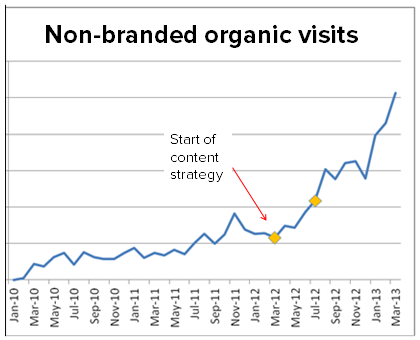
Ongoing articles and key landing pages are essential to driving search traffic. Last month, we shared some Brafton insights on how a news content marketing strategy more than doubled non-branded organic traffic for one site. Visitors who arrived from longtail phrases drove a 10-fold increase in site leads.

We've also shared data showing even content that isn't crawled can be good for SEO. White papers behind a download wall can still drive links - and one of our reports shows that about one-third of a clients' highest-trust inbound links point to the various landing pages for its white papers.

New insights from Cutts: Is Penguin coming?

Matt CuttsOrganic link building is still on most content marketers' minds. Earlier this year, Matt Cutts said the biggest algorithm of 2013 was coming in the form of a Penguin refresh. Still no Penguin updates, but in an April webmaster video, Cutts told marketers internal links wouldn't likely draw the ire of algorithms. He also shared some content SEO tips about adding new web pages: If you're moving a content archive, update your site gradually. Thousands of pages at once might raise eyebrows at Google and your site can undergo some manual scrutiny.

Thanks for tuning in, and subscribe to Brafton for more content marketing updates and insights.

Media files:
Social-content.png (image/png, 0.5 MB)
You are receiving this email because you subscribed to this feed at blogtrottr.com.

If you no longer wish to receive these emails, you can unsubscribe from this feed, or manage all your subscriptions

Brafton: Social media growth fueled by by older demographics, led by U.S. moms

Brafton
News Content Marketing
Social media growth fueled by by older demographics, led by U.S. moms
May 1st 2013, 19:28

Mothers rely on social media for information

​Social media isn't a new fad that only teens and college students understand, according to a new international study by GlobalWebIndex. The report shows that older internet users fuel growth for Facebook, Twitter, LinkedIn, Pinterest and Google+.

While more people are accessing social networks from their mobile phones, older consumers across the world are taking to these sites from a variety of devices. Between Q2 2012 and Q1 2013, Twitter saw a 79 percent increase in users aged 55 to 64. However, both Facebook and Google+ experienced user growth among consumers between the ages of 45 and 54, increasing by 46 percent and 56 percent respectively.

It's important for social media networks to attract more diverse members that span age brackets. If these companies expect to profit from advertising features, they must prove social media content can reach prospects all over the world, from every background and with varying levels of life experiences.

Moms and social mediaA new study conducted by comScore for online parenting resource BabyCenter found that U.S. mothers are extremely active social media users. The report shows that more than 90 percent of American moms use social media regularly, making disconnected mothers a thing of the past. BabyCenter estimates a 20 percent increase in social moms between 2010 and 2013. More, mothers are active on some obscure social media hubs, helping marketers who target moms understand the content types that appeal to these impressionable consumers.

The study noted that moms use networks like YouTube, Instagram, Twitter, Pinterest and Google+ more frequently than the average internet user. The biggest gap is on YouTube - 77 percent of U.S. mothers use the video-sharing network compared to 61 percent of the population.

Brands must embrace social media marketing as a way to reach all of their potential customers. If attempting to reach mothers, social sites may be the solution. To see returns on their investments, companies must create a variety of custom content to reach prospects where they're most active. For example, video content can attract U.S. mothers' attention as they engage frequently on YouTube.

Media files:
shutterstock_21869719.jpg (image/jpeg, 0.3 MB)
You are receiving this email because you subscribed to this feed at blogtrottr.com.

If you no longer wish to receive these emails, you can unsubscribe from this feed, or manage all your subscriptions

Brafton: Google’s updated image interface: Brands lose clicks

Brafton
News Content Marketing
Google's updated image interface: Brands lose clicks
May 1st 2013, 17:00

Image Search on Google and Bing. Good for SEO?

​Google released an image-search update in January 2013 that brought high-resolution pictures directly into SERPs. Unfortunately, image quality is so high that few web users see the point of clicking through to host sites. According to Define Media Group, image search traffic dropped 63 percent after Google's user interface was released. Websites that optimized their pages with SEO content to increase visibility for their graphics experienced declines of approximately 80 percent.

Consequently, Bing took a different approach when it updated its image search function in April 2013. Microsoft's own search engine integrated its filtered search technology with Pinterest, helping people easily pin content they love from search results to specific boards. While at first glance this may seem to harm websites just as much, Bing makes sure to automatically attribute pinned social media content to the original, high-resolution source. Therefore, web users creating Pinterest boards for inspiration on what to buy or create can use Bing's search to filter through their options, pin their favorites to Pinterest and, when it comes time to convert, access the original sources through links on Pinterest.

All-in-all, this creates a dynamic lead-nurturing process and helps companies engage their audiences across multiple touch points.

Media files:
shutterstock_109207313.jpg (image/jpeg, 0.7 MB)
You are receiving this email because you subscribed to this feed at blogtrottr.com.

If you no longer wish to receive these emails, you can unsubscribe from this feed, or manage all your subscriptions

Brafton: When does fresh, custom content rank first? Cutts has the answer

Brafton
News Content Marketing
When does fresh, custom content rank first? Cutts has the answer
May 1st 2013, 16:53

SEO No.1 ranking

When companies create new custom content for their websites and see their search rankings soar, they might expect those results to stick. Unfortunately, that initial search marketing win can falter if marketers have not appropriately assessed their contents' freshness.

Google's Search Engineer Matt Cutts recently responded to a publisher's concern about content freshness in a new Google Webmaster Help video, explaining when content deserves to rank first and when it doesn't. The publisher writes that one of his landing pages ranked first for a targeted key phrase, but then dropped over the new few weeks.Google's Matt Cutts talks fresh content and SEO.

Cutts explains that search engines are responsible for returning the best-quality results, but often must do so with limited information. So, some SEO content might rank high when it's first released if it deals with trending topics or breaking news. Over time, the same news content or landing pages that earned high search rankings for certain queries might fall as other sites with more relevant and fresh posts may assume top positions.

"There are some queries that deserve freshness (QDF), [but] there are some queries that are better served by evergreen content that's been around for a long time," states Cutts.

Google aims to help users find the most relevant results for their queries by developing algorithms that determine which sites are posting timely material and those that are considered long-standing authorities on specific topics. The freshness algorithm sifts through online content to give searchers the latest news and updates about trends and events.

News content marketing is a great strategy for hitting on timely industry queries that can connect brands with interested audiences, but marketers who want to rank higher for core key terms should also build out their websites with strong landing pages that inform as much as they sell. Updating even "static" content sections periodically can ensure they've got accurate information for readers and keep search engine crawlers coming back, helping brands remain on page 1 of Google SERPs.

Media files:
SEO-No.1-ranking.jpg (image/jpeg, 0.5 MB)
You are receiving this email because you subscribed to this feed at blogtrottr.com.

If you no longer wish to receive these emails, you can unsubscribe from this feed, or manage all your subscriptions

Brafton: Custom infographics drive clicks, Tweets and links for SEO [data]

Brafton
News Content Marketing
Custom infographics drive clicks, Tweets and links for SEO [data]
May 1st 2013, 14:44

Infographic marketing drives website conversions, social shares and links for SEO.

​Graphics can help broaden a brand's content marketing strategy, but it's important to put out high-quality images to see noticeable ROI. Whether a company uses visual media to bring color to its blog posts, as display ads in search engine results pages or for infographic marketing campaigns, viewers are drawn to images and share them with their personal networks.

U.S. businesses already embrace infographic content for lead generation. According to the Content Marketing Institute, 38 percent of B2Bs and 33 percent of B2Cs use these graphics to turn written blog content into clickable and shareable images. Site visitors who engage with infographics are likely to share them on their social profiles or email them to friends or colleagues. All of this drives website conversions.

A recent case study from Submit In Me compared the effects of display ads to infographics. The source notes that the cost of a single infographic produces content ROI for months, unlike display ads which charge by the impression, click or keyword. Submit In Me discovered that infographics have 300 percent more visibility than display ads, and companies that want to increase traffic to their web pages may want to optimize SEO content to accompany these graphics for search.

The source's client spent a minimal amount of money to produce an infographic, and it saw more than 5,000 views, over 50 new backlinks and beyond 200 social shares within five days. Without a doubt, the infographic continued to gain traction each day, helping the publishing brand break into new markets.

Marketers who want to strengthen their brands' online presences and improve the lead-gen powers of their campaigns need graphics. Images prove to be effective marketing and sales tools, no matter the industry or customer base.

Media files:
shutterstock_114662647.jpg (image/jpeg, 0.4 MB)
You are receiving this email because you subscribed to this feed at blogtrottr.com.

If you no longer wish to receive these emails, you can unsubscribe from this feed, or manage all your subscriptions

Brafton: Google+ marketing supports interactive posts with clickable CTAs

Brafton
News Content Marketing
Google+ marketing supports interactive posts with clickable CTAs
May 1st 2013, 13:30

Google Plus marketing for businesses.

​Google+ wants to separate itself from other social networks, and for good reason. Facebook has carved out the lion's share of the social space, attracting people from all corners of the world, and Twitter has become today's go-to second-screen platform and news provider. LinkedIn, with all of its professional influences, has turned into an everyday tradeshow, and Pinterest speaks especially well to B2C audiences. Where does Google+ fall? Chances are it will be the answer to demands for social search, and new feature updates will only make it easier for brands to convert site visitors.

Google+ introduced a new social media marketing feature in February 2013 called Interactive posts. This update allows Page managers to create on-site buttons for social sharing. For example, a business can develop an RSVP button for an event it is hosting or a CTA to drive Google+ connections back to branded websites. According to the search engine company, interactive posts improve website conversions and increase social engagement.

The engine also notes that interactive Google+ posts go right in the social stream similar to traditional updates, but they include clickable CTAs and support deep linking. This secondary function allows the Google+ application on mobile devices to​ host​ interactive post​s, so when a user engages with a custom CTA, the event opens in the application, and does not drive the person to the mobile web. The deep-linking feature helps brands convert leads right away, and with xAd's new report showing that 46 percent of Americans rely on mobile devices to purchase in-demand products, Google+'s interactive posts may help it appeal to mobile audiences.

46 percent of Americans rely on mobile devices to purchase in-demand products, Google+'s interactive posts may help it appeal to mobile audiences.

Companies that are wary of the inevitable transition from desktop search to mobile activity shouldn't rush to the developer's drawing board to create their own applications, but instead embrace mobile options available for free. Google+'s mobile app may not be atop the download lists in iTunes or Google Play, but with a little innovation, the search engine may just find a niche for its own social network yet.

Google+ marketing can take advantage of mobile trends, but it also has its foot through the door with Authorship. It would benefit any marketer to set up his or her Authorship and put a picture next to blog content. Check out Brafton's Authorship examples here to learn why it's so important to establish this social credibility before your competition.

Media files:
shutterstock_82331755.jpg (image/jpeg, 0.6 MB)
You are receiving this email because you subscribed to this feed at blogtrottr.com.

If you no longer wish to receive these emails, you can unsubscribe from this feed, or manage all your subscriptions