Thursday, 3 January 2013

Brafton: Ninety-two percent of mobile video viewers share content

Brafton
News Content Marketing
Ninety-two percent of mobile video viewers share content
Jan 3rd 2013, 17:30

shutterstock_109596950

Marketers know that adopting new promotional techniques early on gives them advantages over their competitors. The challenge comes when taking the leap of faith and funneling resources toward a practice that's not fully realized. For example, Americans watch and share video content often, but few brands have advanced video marketing campaigns. As 2013 develops, businesses may realize that visual media will have an impact in the digital world this year. Brands must have an idea of how they'll produce and distribute consistent video media in the near future.

Video content: It's not a trend anymore

Video streaming and viewingRecently, Cisco Internet Business Solutions Group studied the trends and behaviors of 1,152 video consumers in the United States. The study discovered that online video became more than a passive hobby in 2012, with internet enthusiasts engaging with and sharing visual media more frequently than ever before.

According to the study, 70 percent of U.S. broadband users watched professionally produced online video content at least once a week. More, the same percentage of Americans spent an average of 100 minutes per week viewing visual media. The data went on to show that 94 percent of 18- to 24-year-olds accessed video content over the past year.

Mobile video viewership leads to shared media experiences

Video Content SharingWhile video content consumption increased in 2012, mobile technology saw the greatest uptick in engagement. A new study from On Device Research shows that Americans spent their time accessing a variety of visual media from their mobile devices last year. In fact, 41 percent of survey respondents said that they watched a tutorial or how-to clip. Brands that want to reach consumers with educational content can do so via video.

The report from On Device Research also noted that 85 percent of the videos watched by Americans were short-form clips. While the study defined short-form clips as under ten minutes in length, marketers may find they can easily and effectively deliver their messages in even less time. This means that brands don't have to produce long, narrative clips to retain consumers' attention, and that shorter videos may lead to more impressions. In fact, On Device Research notes that 92 percent of mobile viewers went on to share content with their friends and family.

Business owners looking to invest in a new marketing practice must consider the many benefits of video content creation in the United States.

Media files:
shutterstock_109596950.jpg (image/jpeg, 0.3 MB)
You are receiving this email because you subscribed to this feed at blogtrottr.com.

If you no longer wish to receive these emails, you can unsubscribe from this feed, or manage all your subscriptions

Brafton: CEOs join marketers and consumers on social media

Brafton
News Content Marketing
CEOs join marketers and consumers on social media
Jan 3rd 2013, 18:00

CEOs use social media

Marketers and consumers are familiar with sites like Facebook, Twitter, Pinterest and LinkedIn, spending time connecting with prospective customers, friends, family and favorite brands. They're not alone - CEOs from Inc. 500 and Fortune 500 companies are creating accounts, posting status updates, pictures, Tweets and more, according to the "Social CEO Showdown Report," conducted by CEO.

CEO's social presence can bring success

Content marketers should take note of CEO's research, which shows that a powerful individual's presence on social media sites can bring success to a company. According to recent research by SocialToaster, celebrities, well-known bloggers, friends and family can all influence users on social media sites. CEOs of popular brands can join these popular networks to promote their company and build thought-leadership.

Fastest-growing companies beat out largest companies

The research report sought to compare social media habits among America's most prominent CEOs, contrasting leaders' behaviors in the largest companies (Fortune 500) versus the fastest-growing companies (Inc. 500).

Content marketers and social media experts will not be surprised to learn that Inc. 500 CEOS are 12.9 times more likely to be active on Twitter than their Fortune 500 counterparts. Seventy-nine percent of Inc. 500 CEOs have one or more social media accounts, compared to 30 percent of Fortune 500 CEOs.

"What accounts for the disparity? There are several potential reasons why Inc. 500 CEOs naturally gravitate to social  channels - and why Fortune 500 CEOs do not. The most obvious is that Inc. 500 CEOs are younger and have a natural affinity for innovative tools that will help their companies grow faster and gain a competitive edge. The average age of Inc. 500 CEOs is 42, compared to approximately 55 for CEOs in the Fortune 500."

Companies looking for an edge

Why isn't this news surprising? All told, social media is growing rapidly and young companies use these networks to gain an edge. Marketers looking to gain a competitive advantage in a startup-friendly, fast-paced and digital world are channeling content marketing efforts towards social media. According to CEO, there are several reasons why Inc. 500 CEOs are ahead - not only are they younger, but they have fewer constraints. Although Fortune 500 CEOs may not believe a social media presence is important, CEO reported that companies perform better if CEOs are active proponents of social sites.


Media files:
shutterstock_111994784.jpg (image/jpeg, 0.9 MB)
You are receiving this email because you subscribed to this feed at blogtrottr.com.

If you no longer wish to receive these emails, you can unsubscribe from this feed, or manage all your subscriptions

Brafton: On-the-go Facebook users create new opportunities for brands

Brafton
News Content Marketing
On-the-go Facebook users create new opportunities for brands
Jan 3rd 2013, 16:31

shutterstock_83795662

Social media thrives in American culture. From the moment people wake up in the morning to the seconds before they close their eyes at night, social networks like Facebook consume their minds, and active members can't resist the temptation to update their statuses or post links and photos. It's no wonder that Facebook has begun to exploit mobile technology to improve native advertising and social media marketing campaigns.

AYTM Survey Facebook MobileAccording to Ask Your Target Market's latest survey, 18 percent of respondents said that they often use Facebook on their mobile devices. Seventeen percent of respondents admitted that they sometimes use Facebook mobile apps, and 10 percent indicated they rarely log onto their accounts via their phones or tablet devices. Of the people who use mobile Facebook, 44 percent said that they connect with many brands through the platform, and 32 percent said that they interact with at least one company via Facebook. These figures are higher than the averages from PC users. AYTM data shows that 36 percent of PC users connect with several brands on Facebook and only 29 percent engage with at least one.

ATYM research suggests that mobile users - an already growing population of people - interact with more brands online than consumers on PCs. More, Nielsen's "State of the Media: The Social Media Report 2012" discovered that between July 2011 and July 2012, high percentages of Americans transitioned to mobile Facebook users from stationary PCs. The report noted that more than 78 million Americans accessed Facebook through mobile applications - up 88 percent year-over-year. Approximately 74 million people in the United States logged onto Facebook via the mobile web, an increase of 85 percent. However, consumers using Facebook on their personal computers dropped by 4 percent year-over-year, serving more than 152 million Americans.

Barclay Facebook App GrowthCurrently, the way people access social media content on the web continues to change. Americans already show they're willing to switch over to mobile technology at impressive year-over-year rates, and Facebook's native advertising makes that market trend appetizing to brands across the nation. Barclays Capital expects Facebook mobile use to reach 1 billion global users by 2014, so developing a social media marketing strategy has become an essential practice for businesses everywhere.

Marketers working on their 2013 social marketing campaigns should consider optimizing branded content for mobile devices. Make sure the tools being used to measure traffic, clickthrough rates and conversions can evaluate mobile users, and publish visual content that's accessible across multiple devices.

Media files:
shutterstock_83795662.jpg (image/jpeg, 0.5 MB)
You are receiving this email because you subscribed to this feed at blogtrottr.com.

If you no longer wish to receive these emails, you can unsubscribe from this feed, or manage all your subscriptions

Brafton: Video content drives mobile engagement

Brafton
News Content Marketing
Video content drives mobile engagement
Jan 3rd 2013, 15:30

shutterstock_45404629

The world is changing as people transition from spending time on desktop computers to accessing content via mobile devices. In fact, marketers can't afford to overlook this inevitable occurrence any longer, especially with tablet devices making their way into American homes more frequently than ever before.

Video Content Use MarketingSherpaAccording to comScore's "Brave New Digital World" report, approximately 15 percent of web content is viewed on devices besides PCs. People search for and engage with custom content from their smartphones, tablets, smart TVs, game consoles and eReader devices. More, mobile marketing continues to be a relatively new outreach channel, and marketers struggle to leverage its reach for lead generation and conversion.

MarketingSherpa recently reported that 71 percent of survey respondents said they would increase their mobile marketing budgets moving into the new year. Additionally, the company sought to find areas in which professionals could improve their content creation and distribution for mobile channels. Since many survey respondents admitted they struggle to find success through mobile marketing, MarketingSherpa contributor John Tackett spoke with Benjamin Filip, research manager of data sciences, at MECLABS to identify what content type thrives on mobile devices. The answer: video content.

"Marketers looking for an easily implementable strategy that produces very effective results should focus resources to include video content," Filip said. "Including video content sooner rather than later will put [brands] ahead of the curve compared to other mobile marketing campaigns."

According to the source, MarketingSherpa's survey respondents reported that video content continues to be a highly effective tactic, but it's not used frequently. Marketers who want an edge over the competition may want to consider creating video marketing campaigns that reach consumers across multiple channels. While video content doesn't have to be designed solely for mobile lead generation, highly relevant and engaging content will appeal to on-the-go users and stationary consumers - the best of both worlds for marketers.

Media files:
shutterstock_45404629.jpg (image/jpeg, 0.5 MB)
You are receiving this email because you subscribed to this feed at blogtrottr.com.

If you no longer wish to receive these emails, you can unsubscribe from this feed, or manage all your subscriptions

Brafton: Content marketing recap: December 2012

Brafton
News Content Marketing
Content marketing recap: December 2012
Jan 3rd 2013, 14:28

Content Marketing Recap

December rang in myriad content marketing developments, and the month's end also meant the start of a new year. While many marketers hopefully enjoyed the festive season, here's our take on the end-of-year content marketing trends that could help you get a competitive edge.

SEO is (still) all about content 

Content that creates a positive user experience is still the only way to stay ahead of the search curve, evidenced by an algorithm tweak around December 13th that caused noticeable SERP changes - though it wasn't any of the usual animal-themed suspects. Matt Cutts confirmed on Twitter it was one of the company's other 500+ algorithms rolled out each year to keep brands on their toes.

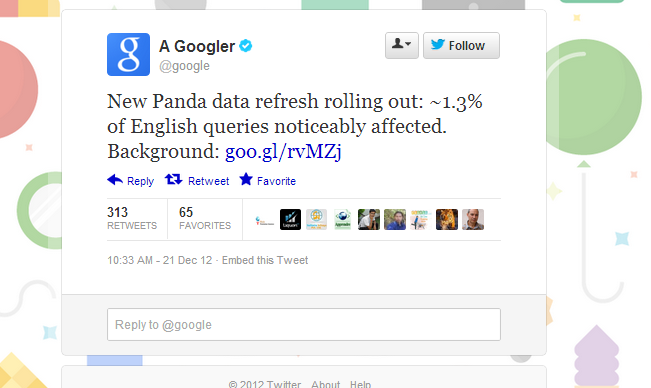
Then, the company released content-centric Panda 23 on December 21, changing results for 1.3 percent of queries.

MattCuttsTweet - no Panda


Social marketing: It's time to call in the experts

Content that fuels SEO should be a top priority for 2013, but more than half of brands will boost their social marketing, according to a recent StrongMail survey. 

One of the largest investment areas is social media marketing technology, cited as a priority for 26.5 percent of respondents.

While technology and automation tools may get a boost, many companies could benefit from hiring experts who provide easy integration and goal-appropriate metrics. Social measurement is a top challenge for brands.

A NASDAQ report shows 65 percent companies currently assign social tasks to non-specialized employees, and 27 percent are unsatisfied with how their brands measure social results.

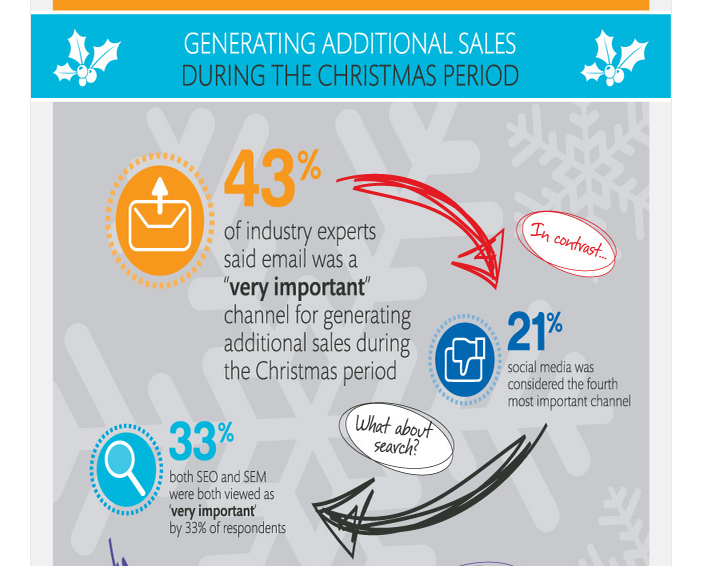
It's time turn to savvy and innovative social marketers who can become your brand advocates and generate social leads in 2013 - especially as eCircle reports 21 percent of companies say social marketing helped drive holiday sales. 

Email marketing is a not-to-be-forgotten asset

If holiday sales figures are any indication, boosting email marketing is a wise investment too. Forty-three percent of eCircle respondents said email was "very important" to generating additional sales this Christmas. 

While email is undoubtedly one of the more "traditional" web marketing outlets, it's an ever-evolving channel that businesses are ready to spend big on this year. Strongmail found email marketing program investments will rise among 55.5 percent of its survey respondents. Companies that want to maintain or gain an edge in prospects' inboxes should be armed with standout messages that capture clicks.

For email success, fresh, mixed media content is key. SundaySky reports videos in emails and subject lines help clicks jump 26 percent or more. 

2013: The year of video

December brought a flood of headlines about the top web videos of 2012 - spanning industries and genres. Some roundups to check out:

  • The best Matt Cutts videos from WebProNews
  • The top 10 video ads that went viral charted by Mashable 
  • Four of the best marketing videos of the year according to CBS News (a publication that shows video marketing has entered mainstream consciousness)

Video is on its way to becoming 2013's hottest content. Overall, Brafton has reported that 2012 was a record-breaking year for video. The web format reached an all-time high of 188 million American viewers in August, and various content surveys indicate the majority of U.S. businesses invest in some form of video content for marketing purposes.

Those brands who want to set themselves apart in the New Year will need to treat videos like other marketing efforts: Strategy and consistency are required. Brafton's latest marketing guide, Video Marketing from Production to Purchases, offers a video marketing checklist and tips for executing sustainable, results-focused video campaigns.

Cut the content overload and focus on a strategy

As more content types enter the mix, it's important that brands have a cohesive strategy to unify all their content marketing programs. An IMN report reveals only 28 percent of marketers have cross-channel content strategies, and just 32 percent have editorial calendars. 

Marketers need to make it their News Year's resolutions to develop integrated, multi-format content marketing strategies to drive search, social and email leads in 2013 - or find partners who can.

Media files:
Content-Marketing-Recap.png (image/png, 0.3 MB)
You are receiving this email because you subscribed to this feed at blogtrottr.com.

If you no longer wish to receive these emails, you can unsubscribe from this feed, or manage all your subscriptions

Brafton: YouTube’s reach helps maximize video content marketing success

Brafton
News Content Marketing
YouTube's reach helps maximize video content marketing success
Jan 3rd 2013, 14:30

shutterstock_87880246

YouTube went through many changes in 2012, as Google developed new strategies to increase user-ship and attract marketers to the platform. As Brafton reported, the online-video streaming network serves more than 800 million unique users each month, and the site showcases more than four billion hours of video content. More, users upload 72 hours of video content to YouTube every minute, making the channel an evolving and hyper-active network for brands and consumers.

In 2012, Google's social video network made a deal with Virgin America Airlines, providing in-flight YouTube clips to passengers as part of the on-board entertainment suite. The deal put YouTube in front of a significant number of new users, and gave travelers a better in-flight experience. As 2013 develops, YouTube could improve its reach even further, and many marketers suggest professionals take another look at the site when planning this year's video marketing budget.

Brands that publish branded content to YouTube must take into account SEO best practices and focus on keywords.

Recently, Econsultancy published a blog post that put audience targeting on YouTube into greater perspective. The source highlighted a few benefits brands can see after optimizing their channels and publishing video content to YouTube. For example, YouTube's search function thrives similarly to how Google's algorithms trump its competitors. Brands that publish branded content to YouTube must take into account SEO best practices and focus on keywords.

In addition to keywords, contextual targeting matches keywords with titles, tags and video descriptions, so similar media will have a higher chance of reaching leads. YouTube also offers remarketing opportunities. This gives brands the chance to put relevant content in front of consumers who've already visited corporate websites in the past. Through YouTube's improved advertising capabilities, reaching and converting leads can be easy, as long as brands consistently produce high-quality visual content.

Econsultancy notes that the hardest part of developing an effective YouTube marketing campaign continues to be producing enough visual media to populate channels.

Econsultancy notes that the hardest part of developing an effective YouTube marketing campaign continues to be producing enough visual media to populate channels. Businesses slow to adopt video content as part of their content marketing campaigns should reach out to third-party services for help. Content marketing services can provide the strategy, production time and publication of branded video content regularly, which takes the pressure off of businesses with no access to specific technology, and increases lead generation opportunities through Google's highly active social channel.

Media files:
shutterstock_87880246.jpg (image/jpeg, 0.8 MB)
You are receiving this email because you subscribed to this feed at blogtrottr.com.

If you no longer wish to receive these emails, you can unsubscribe from this feed, or manage all your subscriptions

Wednesday, 2 January 2013

Brafton: A lunar landing next for Facebook? It’s already taken over the world

Brafton
News Content Marketing
A lunar landing next for Facebook? It's already taken over the world
Jan 2nd 2013, 20:57

shutterstock_90527779

Facebook's world domination is unquestionable, and social media marketers work 'round the clock to ensure their brands get exposure on the site. As Facebook grows in popularity in countries around the world, "Likes" and "Shares" may reach consumers who are next door, down the coast or on the other side of the pond.

Cosenza shows off a map

Vincenzo Cosenza, an Italian social media strategist, puts together the "World Map of Social Networks" every six months to show how users engage with social content around the globe. Thankfully, The Next Web provided a translation of Cosenza's most recent findings, showing that Facebook is the most dominant social network in the world, winning the top spot in 127 of the 137 countries that were tracked.

World Map of Social Networks - December 2012

A global presence = domestic power

Although brands in the U.S. may only be concerned with domestic traffic, Cosenza's findings reveal year-over-year growth in Facebook's overall presence, demonstrating the need for global social media marketing strategies that reach prospects located all around the world. According to The Next Web, there were 17 top social networks in 2009, but only 5 remain as very active hubs for social sharing. Facebook's continuous growth in Asia has positioned it at the top, reported the news source. Social media marketing professionals should take heed, optimizing content for "Likes" and "Shares" on Facebook.

Marketers understand Facebook

A report by SocialCode reveals that marketers are beginning to understand how content gets distributed on the social platform, resulting in improvements in strategy and opportunities for optimization.

"The majority of activity comes instantaneously, making it very important to differentiate post content from that of other brands. If a post is not immediately intriguing, the chance of it getting lost in the news feed after the first hour-and-a-half is likely."

By analyzing when posts see engagement, as well as what types of posts garner traffic, marketers can seek to show off their brands on social media sites in real-time.

Media files:
shutterstock_90527779.jpg (image/jpeg, 0.7 MB)
You are receiving this email because you subscribed to this feed at blogtrottr.com.

If you no longer wish to receive these emails, you can unsubscribe from this feed, or manage all your subscriptions